
Waste hydraulic oil comes from excavators, loaders, mining machines, and industrial hydraulics. Over time, hydraulic oil becomes contaminated with water, metal residues, oxidation products, and deteriorated additives. It makes the oil not suitable for further usage. Is there any way to process waste hydraulic oil to obtain diesel fuel?
The possibility of this depends on the chemical structure of the oil, the degree of contamination, and the technology used for processing. Some types of waste hydraulic oil may be suitable for obtaining diesel fuel fractions. The feasibility of this process depends on the feedstock and the selected waste oil to diesel conversion process.
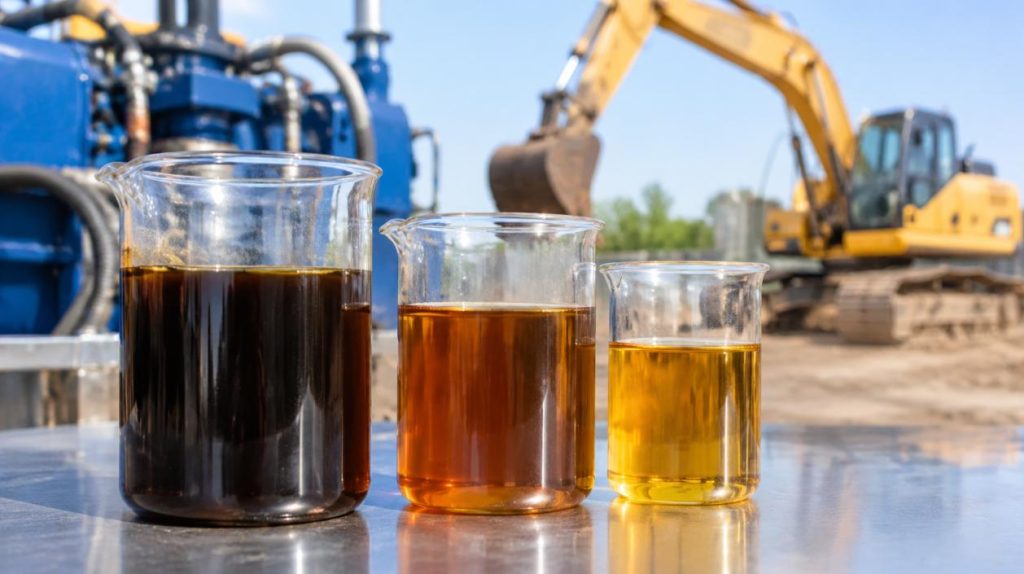
What Types of Hydraulic Oil Can Be Used for Diesel Recovery?
However, not all hydraulic fluids have similar chemical composition. Determining the base oil of the fluid is one of the initial considerations to determine if the waste hydraulic oil is capable of fuel recovery.
Hydraulic Oil Made of Mineral Oil
Hydraulic oil made of mineral oil is a petroleum product that is commonly used in construction machines and industries, including the use of hydraulic systems. Since it is composed of hydrocarbons, some suitable waste mineral hydraulic oil may be subjected to a fraction recovery process by means of distillation.
Synthetic and Water-Based Hydraulic Fluids
The synthetic type of hydraulic fluid should be assessed differently. While PAO fluids differ molecularly from normal mineral-based fluids, synthetic ester fluids are distinct chemically.
On the other hand, water-glycol hydraulic fluids have relatively high levels of water and glycol. As such, it is not advisable to use normal mineral oil distillation facilities to process these types of fluids since they need special treatment. Phosphate ester hydraulic fluids also need specialized assessment due to their unique chemical structure.
It is therefore important to identify the kind of feedstock to enable effective recycling of waste oil.
What Happens to Waste Hydraulic Oil During the Recovery Process?
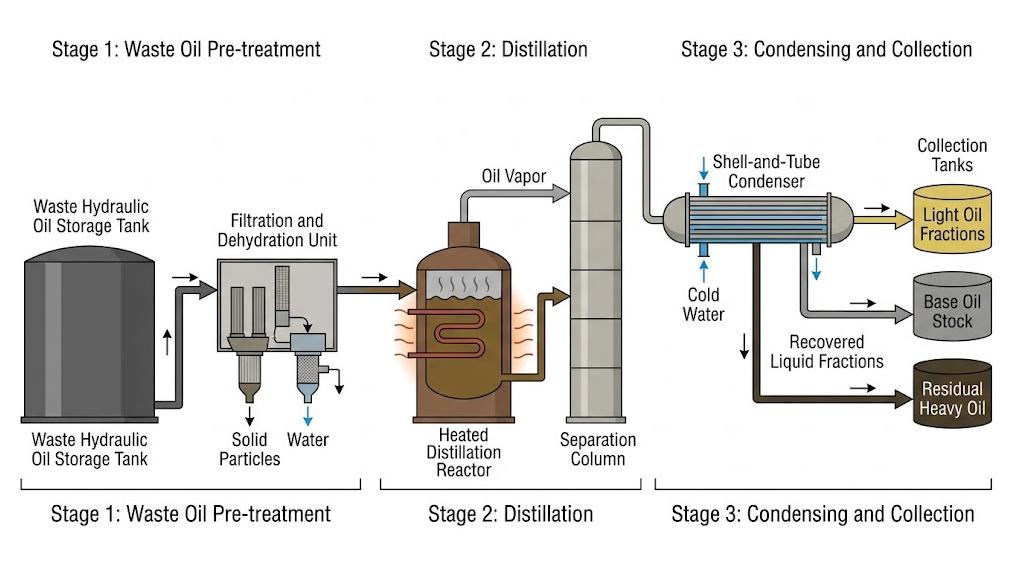
Recovering valuable hydrocarbons from mineral oils used for hydraulic fluids requires passing through a number of processing stages.
1. Removal of Water and Solid Contaminants
Used hydraulic oil is examined and preprocessed using filtration and sedimentation methods that eliminate suspended solids and some free water and moisture content, thus providing higher stability of processing and minimizing the risks associated with the heating process.
2. Thermal Distillation or Thermochemical Processing
The preprocessed oil is fed into the heating process line. In the distillation process, due to heating, hydrocarbons are separated depending on their boiling ranges. If the chosen processing technology is thermal cracking, then the decomposition of larger hydrocarbons occurs at that stage as well.
Distillation and thermal cracking are different processes, and the appropriate method depends on the feedstock and desired product. When different waste oils are processed together, feedstock composition and pretreatment requirements become even more important. Learn more about waste oil processing with mixed feedstocks.
3. Condensation and Fraction Separation
The oil vapor is subjected to condensation and changes back to its liquid form. Various fractions can now be separated depending on their condensation and separation properties. Further refinement may be necessary based on the purpose of the fuel.
What Contaminants Can Affect the Recovery of Used Hydraulic Oil?
The condition of waste hydraulic oil can significantly influence processing requirements, equipment operation, and recovered product quality.
Some contaminants need special consideration:
- Water: Excess water content means greater dehydration needs and may result in difficulties in heating.
- Metallic particles: Iron, copper, and other metal particles constitute solid contamination and residues.
- Oxidation products: Oxidized compounds resulting from prolonged exposure to heat and oxygen.
- Additives: Zinc-, phosphorus-, and other additive-containing compounds can affect residue properties.
- Chlorinated compounds: Some oils may need special identification and handling due to some environmental and operational hazards.
Hydraulic oils contain additives that enhance anti-wear, oxidation resistance, and corrosion resistance. The additives are not necessarily removed through distillation processes. They could still be present in heavy fractions or could influence the characteristics of fractions obtained.
It is therefore necessary to perform analysis of the feedstock before any processing takes place. This will help to know how to treat the oil sample. For a broader overview of the preparation stages, see the steps involved in waste oil recycling.
Can the Recovered Oil Meet Diesel Fuel Specifications?
Just because there is recovery of the diesel fraction does not automatically mean that the resulting product will comply with the requirements of commercial diesel fuel.
In general, distillation involves separation based on the volatiles and boiling characteristics. It doesn’t mean, however, that the process will eliminate sulfur compounds and any other impurities from the feedstock. This would depend on the kind of feedstock and the treatment process employed. Where sulfur reduction is required, additional treatment may be necessary. One option is diesel fuel desulfurization after the initial recovery process.
Tests for the quality of the recovered fuel include:
- Density: Assists in characterizing the recovered fuel component.
- Kinematic viscosity: Specifies its fluidity at certain temperatures.
- Flash point: Gives vital data on the fuel properties concerning handling and safety.
- Sulfur content: Specifies whether there are correct levels of sulfur for a specific application.
- Water and sediment: Identifies the presence of undesired contamination.
- Distillation properties: Assists in assessing the boiling range and volatility of the recovered fuel component.
If the goal is to have automotive diesel, then the recovered fuel component must be analyzed according to the proper fuel specification requirements, for example, EN 590 or ASTM D975, depending on the market.
Thus, diesel-range recovered fractions cannot be considered commercial diesel automatically.
What Should You Check Before Choosing a Waste Oil to Diesel Machine?
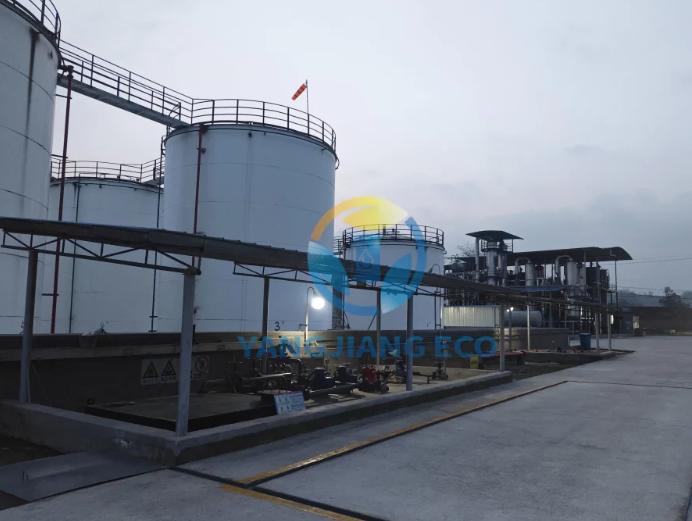
When choosing an appropriate waste oil to diesel conversion machine, one must consider not only the processing capacity but also feedstock compatibility and the desired end products.
Feedstock Properties
Identify the hydraulic fluid type, moisture percentage, sediment content, and other chemical properties. These will help identify whether the selected waste oil is compatible with the intended processing method.
Compatibility of Processing
Ensure that the machine is capable of processing the particular feedstock. A machine engineered for processing used engine oil or regular mineral waste oil does not necessarily process all types of hydraulic fluids.
Target Product Requirements
Determine whether the goal is to recover industrial fuel fractions or to create fuel that needs to meet certain diesel specifications. Different product requirements might require different process schemes and refining stages.
The YJ-DSL Used Oil to Diesel Distillation Machine is intended for waste oil thermal processing and fuel fraction recovery. Suitability of this machine for a certain hydraulic oil feedstock needs to be assessed based on the composition of the feedstock, its contamination level, capacity, and target product quality.
It would be wise to give the supplier information about your feedstock before purchasing the equipment.