
Mechanical Automation Engineer
Procuring waste engine oil without testing it may result in high disposal costs, equipment malfunctions, and low recovery rates. Before purchasing, it is necessary to inspect the appearance, take representative samples, and test key indicators to assess the contamination risk and determine the purchasing value.
Check the Oil’s Appearance and Source
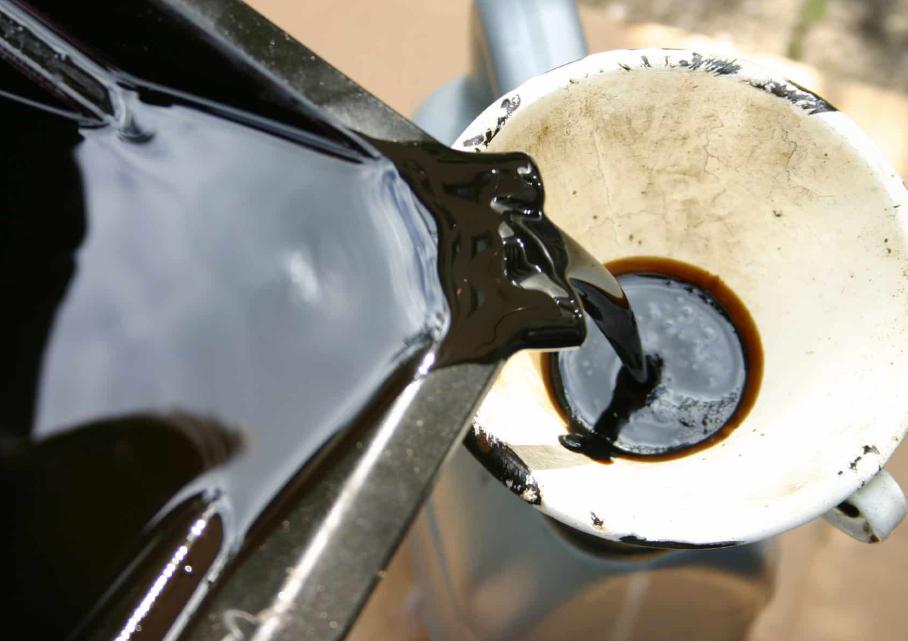
Before conducting laboratory tests, a visual inspection should be carried out first. The main aspects to be checked are as follows:
- Color and clarity: Observe whether there are any abnormal turbidity, uneven appearance or visible contaminants. It should be noted that just because the color is darker does not mean the waste oil is unsuitable for recycling.
- Water separation: Check if there is an independent water layer at the bottom of the storage tank or container.
- Sediment and sludge: Observe whether there are dirt, metal particles and excessive oil residue; these impurities may increase the difficulty of subsequent filtration treatment.
- Source of the oil: Ask about the origin of the waste oil – whether it comes from an auto repair shop, fleet maintenance point, engine repair operation, or is a mixed waste oil streams.
In addition, the supplier should be informed about the collection and storage methods of the waste oil. Waste oil from different sources may contain different pollutants. If the waste oil is mixed with coolant, cleaning solvents or other industrial waste materials, additional testing may be required.
Of course, the visual inspection is only a preliminary screening method. Waste oil with a clear appearance may still contain dissolved pollutants, and waste oil with a darker color may not necessarily be unsuitable for recycling. This is only the first step. Do not make a purchase decision solely based on color or odor.
Take a Representative Sample Before Testing
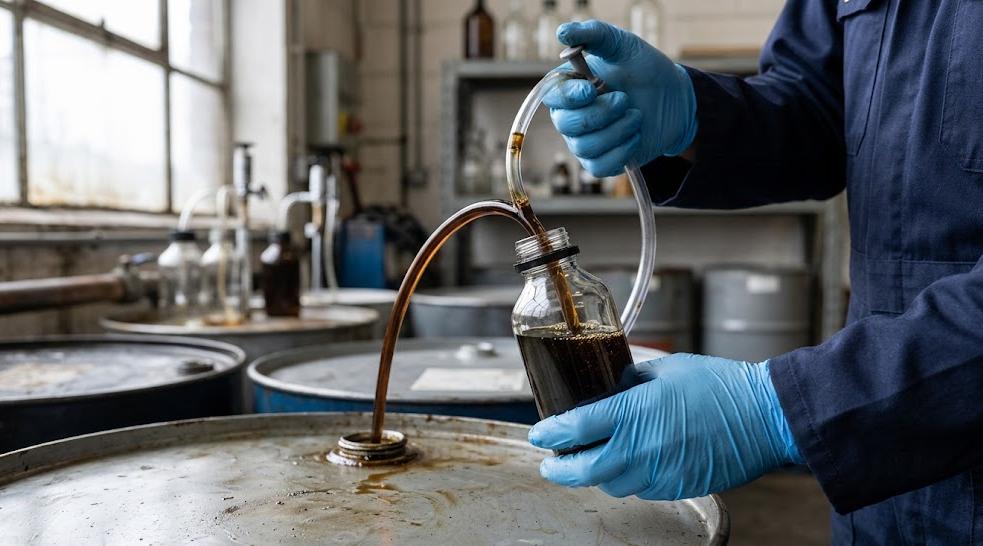
For reliable waste oil testing, the sample must represent the actual batch being considered for purchase.
Use clean, dry and suitable containers to hold the samples, and seal them properly. Also, record information such as the supplier, batch number, sampling date and sampling location.
For waste oil in large storage tanks, sampling should not be done from the surface alone. Water and heavy solids may settle at the bottom of the tank, and the distribution of pollutants within the tank may vary. Sampling should be conducted from representative locations according to the tank structure and the purpose of the test, or separate tests should be carried out on different layers of materials.
If the oil has clearly stratified, do not blindly mix it without considering the purpose of the test. If necessary, collect samples from the bottom of the tank to assess the accumulation of water and sludge.
Follow the standard sampling procedures and safety requirements, especially when dealing with unknown sources of waste. Make clear marks for each sample to ensure it can be traced back to the specific batch to be purchased.
Test These 5 Key Waste Oil Parameters

Visual examination will not reveal all of the dangers. For the proper purchase of oils, you should pay attention to the following five parameters
| Test parameter | What it tells you | Why it matters |
| Water content | The amount of water in the oil | High water content increases dehydration requirements and energy consumption. |
| Sediment and insolubles | The amount of suspended or settled solids | Excessive solids can increase filtration costs, clog equipment, and cause deposits. |
| Viscosity | How easily the oil flows at a specified temperature | Helps characterize the feedstock and assess its suitability for the intended process. |
| Flash point | The temperature at which vapors ignite under specified test conditions | An unexpectedly low result may indicate volatile contamination and requires further safety assessment. |
| Total halogens | The level of halogen-containing substances | Helps screen for potential contamination from chlorinated solvents and other halogen-containing materials. |
For large-volume purchases, unknown oil sources, or batches with suspected contamination, laboratory testing is strongly recommended before acceptance. Depending on the source and intended recycling process, additional tests for metals, glycol, or specific contaminants may also be necessary.
There are no universal acceptance limits for every waste oil recycling application. Set your limits according to the intended product, process requirements, supplier agreement, and applicable regulations.
How to Decide Whether the Waste Oil Is Worth Buying
After getting the test results, a decision about the purchase should be made according to the test results, rather than evaluating the quality of the oil only on the basis of its appearance.
- Accept the batch: The test results meet the agreed-upon raw material specifications, and no contamination risks are unacceptable.
- Renegotiate the price: The moisture or sediment level in the oil is higher than expected, but taking into account the expected cost of processing, a reasonable investment return will be possible.
- Reject or hold the batch: The source of the oil is unknown, there is a suspicion of severe contamination, important test results are outside the acceptable limits, or there are unresolved compliance requirements.
Before determining the price of the oil, it is necessary to evaluate the total cost of processing the oil. The basic procurement evaluation model is:
Net value = Value of recovered products – Purchase cost – Processing cost – Cost of disposal of residues.
For instance, although one batch of oil is low-cost, it may need extensive dehydrating, filtering, or any other processing work; whereas another batch of oil, although costly per unit, owing to lower contamination levels, is more profitable.
The type and quality of the feedstock also affect its suitability for base oil production. Learn more about which waste oil is suitable for base oil production before making a purchasing decision.
Do not rush into purchasing merely because the quotation of the vendor is attractive. In case of doubtful test results, before receiving the product, you must demand re-testing along with an explanation. Besides, the mutually agreed specification standards and sampling methods must be included in the procurement contract.
Choose the Right Waste Oil Recycling Equipment
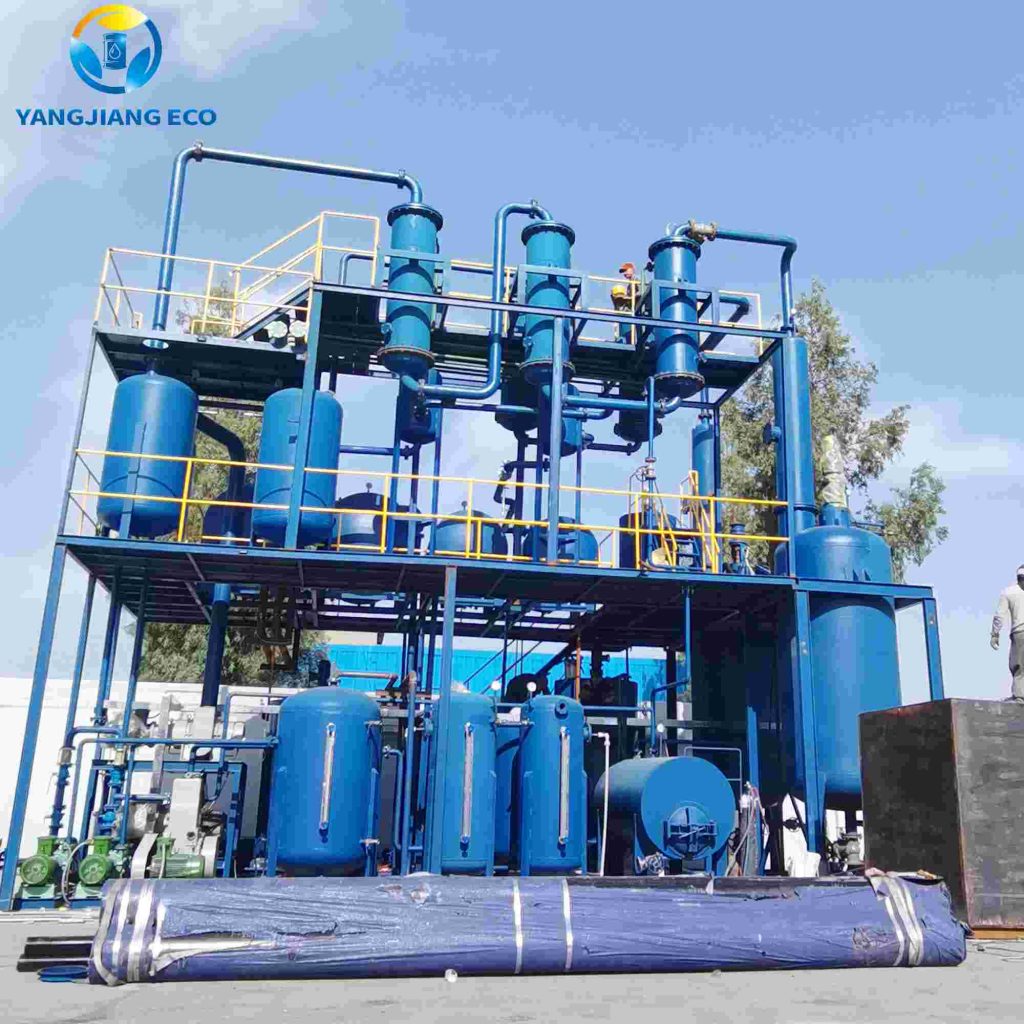
Waste oil testing results can help determine the most suitable recycling process for a particular feedstock.
When there are plenty of water and solid matter in the oil, then better pretreat the oil for the main production flow. When the goal is base oil recovery, the process may involve dehydration, distillation, and further refining, depending on the feedstock properties. Learn more about the used lube oil recycling process to understand how these stages work together.
Consequently, the equipment design must be adapted to the oil type, capacity of the operation and target product you are going to produce. Not all kinds of raw materials require the same processing procedure.
If you are planning a waste engine oil recycling project, visit YANGJIANG to explore our waste oil recycling plant and equipment solutions. Information about your feedstock source, expected processing capacity, and target product can help us assess a suitable equipment configuration for your project. The data about the kind of raw material, processing capacity, and target products that you expect to receive will help to choose the most suitable equipment configuration.
Before buying waste engine oil for recycling, inspect the batch, collect representative samples, test key parameters, and estimate treatment costs. Proper testing helps buyers assess feedstock quality, reduce purchasing risks, and select a suitable recycling process.
Test first. Calculate the costs. Choose the right process.