

Mechanical Automation Engineer
If you plan to build an waste oil recycling plant, one of the first things you need to consider is: How much floor space is required?
There is no uniform standard figure for this. A small oil recycling unit might occupy less than 1,000 m² of space, while a large re-refining plant equipped with extensive oil storage facilities, truck access routes, and auxiliary facilities might require several thousand m² of land.
When conducting the initial planning, a practical reference range is:
| Plant Size | Typical Capacity | Preliminary Site Area |
| Small | 5–10 TPD | 500–1,000 m² |
| Medium | 10–30 TPD | 1,000–2,500 m² |
| Large | 30–50+ TPD | 2,500–5,000+ m² |
These figures are planning ranges, not fixed requirements. Actual land requirements depend on the process, storage capacity, local safety requirements, site shape and how much space you want for future expansion.
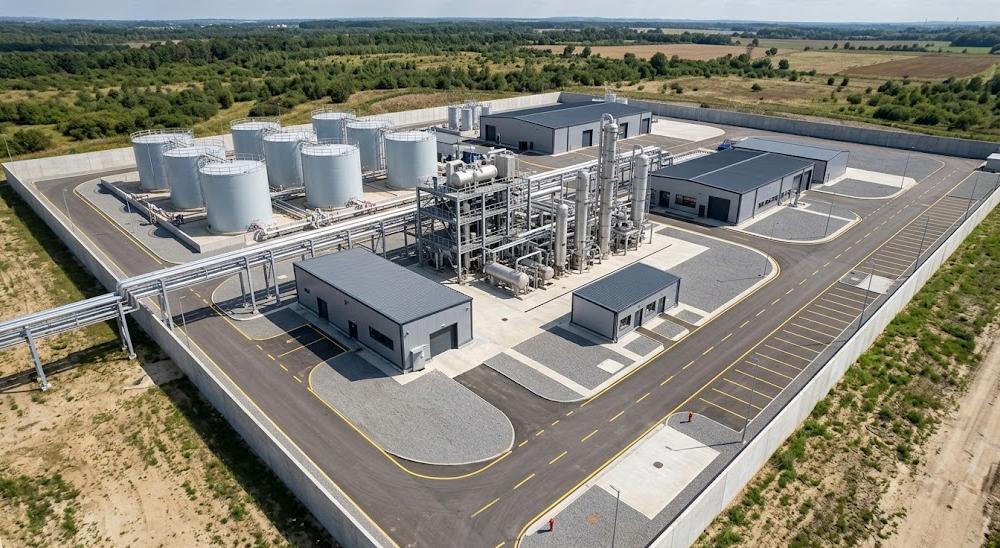
Equipment Footprint Is Not the Same as Total Plant Area
The area required by the recycling equipment itself is only a part of the total land area needed for the construction of a complete waste oil recycling plant.
For instance, although the processing system itself may only require a few hundred m² of space, the entire plant must also accommodate waste oil storage tanks, finished oil storage tanks, truck loading and unloading areas, utilities, pipelines, maintenance passages, and necessary safety distances. Moreover, if you plan to expand the factory in the future, it is best to reserve additional space from the very beginning.
Therefore, two waste oil recycling plants with the same processing capacity may have completely different land requirements. A plant with smaller storage tank capacities and a compact layout may only need a smaller area, while a project with larger storage tank capacities, more auxiliary equipment, and a need for more spacious vehicle passages will require more land.
In summary: When planning the factory site, do not calculate the land requirements based solely on the area of the equipment, but should consider the space needed for the entire operation process.
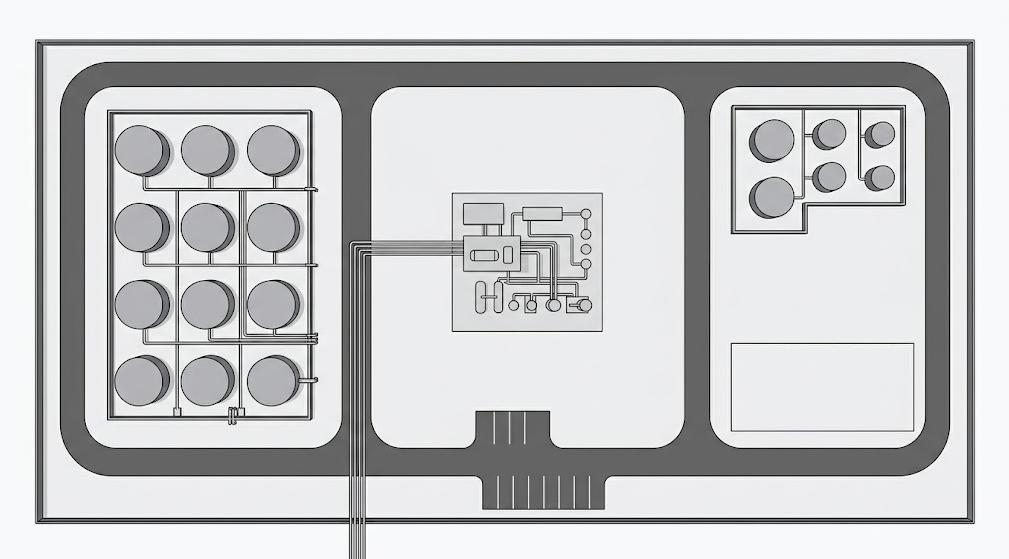
What Uses the Land in a Waste Oil Recycling Plant?
1. Waste Oil Receiving and Storage
The raw material storage area may occupy a considerable portion of the factory site.
You need to reserve space for setting up waste oil reception tanks, loading areas, pumps, pipelines, and truck access routes. The required storage capacity depends on the processing volume of waste oil and the delivery frequency of the suppliers.
For example, a factory with a daily processing capacity of 20 tons (TPD) may not necessarily require a storage capacity of only 20 tons. If a few days’ worth of raw material inventory is needed, the tank area will need to be much larger.
2. Recycling Equipment
The processing area includes the main recycling systems, which may include:
- Pre-treatment equipment
- Distillation system
- Vacuum system
- Heating system
- Condenser and heat exchanger
- Pumps and filters
- Control system
The specific floor area depends on the technology used, processing capacity, and whether the factory adopts intermittent (batch) or continuous production configuration.
3. Finished Oil Storage
The recovered oil products also need to be stored before transportation or subsequent processing.
Depending on the specific project, the products may include base oil, diesel, fuel oil, or other recycled oil components.
If the customer requests to store the finished products for several days or even weeks, the storage area may become one of the largest parts within the factory.
4. Truck Loading and Internal Roads
The space required for a commercial recycling plant is far more than just for placing the equipment.
The waste oil transport vehicles need to enter the factory, unload the raw materials, and then leave; the finished oil also needs to be loaded and transported out.
Therefore, the layout of the factory needs to reserve sufficient space to meet the following process requirements:
Truck → Waste Oil Reception → Storage → Processing → Finished Oil Storage → Loading
If the vehicle access conditions are poor, even if the equipment can be accommodated within the factory premises, operational problems may still arise.
5. Utilities and Auxiliary Facilities
In addition, space needs to be reserved for setting up heating systems, cooling systems, electrical equipment, pumps, pipelines, wastewater treatment facilities, maintenance areas, laboratories, and other auxiliary facilities.
If the floor area requirements are calculated solely based on the dimensions of the main recycling equipment, the space needed for these areas will often be overlooked.
How Much Land Do You Need for a 20 TPD Plant?
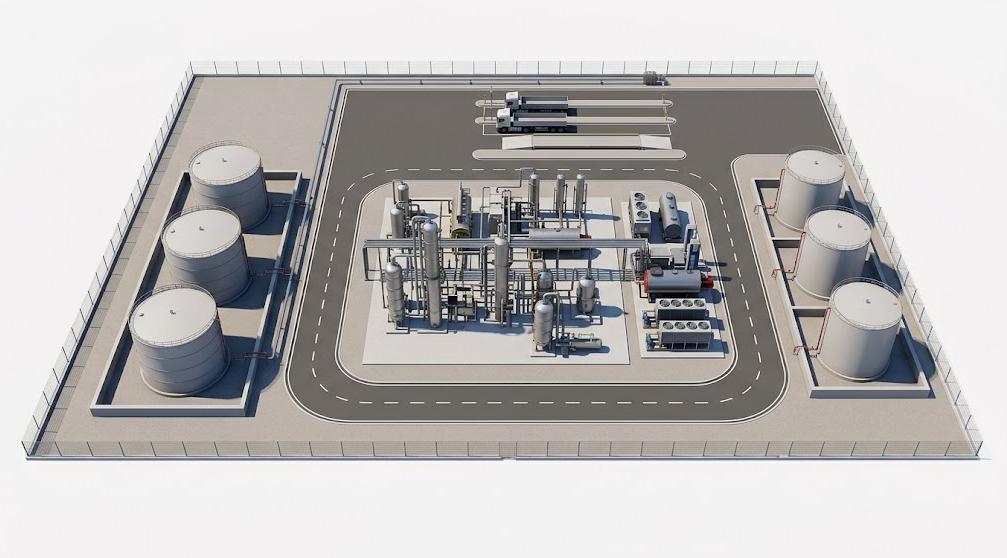
Take a waste oil recycling plant with a daily processing capacity of 20 tons as an example:
The initial site planning layout is as follows:
- Processing area: 400–600 m²
- Raw oil storage tank area: 200–400 m²
- Finished product storage tank area: 150–300 m²
- Utility engineering and auxiliary facilities area: 100–200 m²
- Roads, loading, access and additional space: 300–500 m²
Based on this, the estimated total area required is approximately 1,150–2,000 m².
This is only a planning example. Actual footprint may vary depending on tank specifications, storage requirements, equipment placement, local regulations, and plot shape.
What If You Already Have Land?
If you already own a plot, even if its area is smaller than the generally recommended standard, you may not necessarily need to purchase additional land.
The first step is to comprehensively consider the available area in conjunction with your processing capacity, storage requirements, and site layout.
For example, a 500 m² site might be suitable for a compact small-scale project, but in terms of crude oil storage and truck access, the space might seem cramped.
If you have a site of approximately 1,000 m², through efficient layout planning (especially with carefully designed storage capacity), you can accommodate some small and medium-sized projects.
A site of approximately 2,000 m² can provide greater flexibility for the arrangement of processing equipment, storage tanks, utilities, loading and unloading areas, and internal passages.
A site of approximately 3,000 to 5,000 m² has more ample space to meet larger storage requirements, achieve smoother vehicle access, and reserve space for future expansion.
However, the total land area is only one of the considerations. The length and width of the plot, road access conditions, surrounding buildings, safety spacing requirements, and local regulations will all affect the final layout plan.
Therefore, before determining the factory’s production capacity or equipment configuration, it is best to conduct a site inspection first.
Read more: What Should You Prepare Before Installing a Waste Oil Recycling Plant?
How to Calculate Your Required Land Area?
When conducting the initial planning, you can adopt the following simple method:
Required Land = Processing Area + Storage Area + Utilities + Loading/Access + Safety & Expansion Space
Therefore, before purchasing the land, you should first clarify the following three points:
- How many tons of waste oil do you plan to process daily?
- How much crude oil and finished oil do you plan to store?
- What are the length and width dimensions of the available land plot?
After obtaining these data, you can design the factory layout based on the actual site, thus avoiding forcing equipment into an inappropriate space.
Do you need assistance in evaluating the site?
If you already have the land plot, there is no need to guess whether its area is sufficient.
Please inform us of your site dimensions, target processing capacity, and expected final products. YANGJIANG can assess the initial site layout for you and recommend suitable waste oil recycling factory configuration schemes for your project.