Sludge and spent clay are some of the possible waste streams that could form at a used oil re-refinery. Failing to manage these wastes can lead to increases in operating expenses and oil recovery inefficiencies, as well as pose environmental hazards.
Nevertheless, not all used oil re-refineries produce the same kinds of residues. The amounts and properties of such wastes will vary depending on the nature of the feedstock, pretreatment technology, distillation process, and finishing process of oil.
When planning a waste oil recycling plant, it is necessary to know what types of residue are likely to form and how to manage them.
What Types of Sludge and Solid Residues Are Generated?
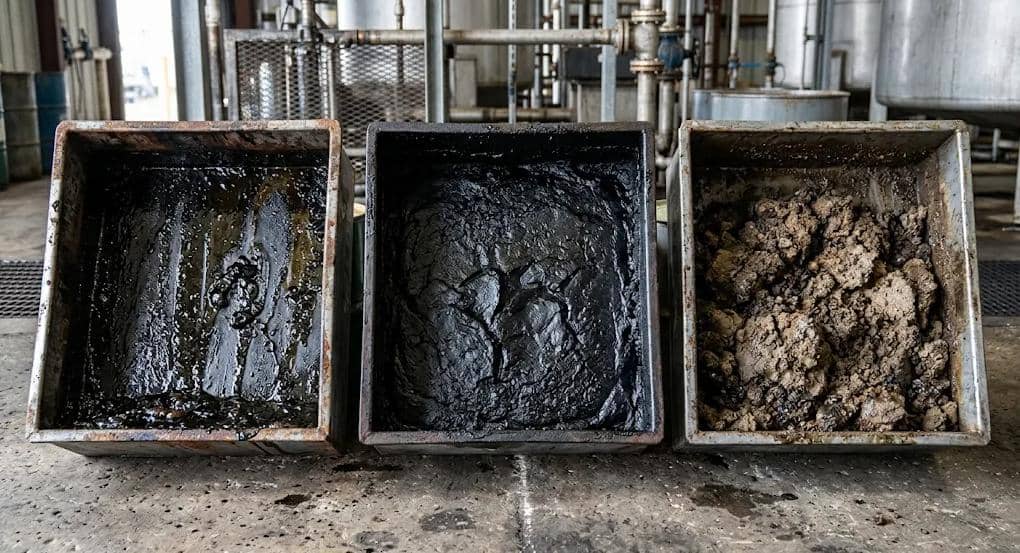
Lubricating oil to be re-refined has impurities such as water, suspensions, used-up additives, oxidation products, and metallic impurities. In the course of refining, all impurities are stripped off of usable oil.
The major impurities can consist of the following:
Pretreatment sludge
Sludges occur in the course of processes such as settling, filtration, centrifuging, and dehydration. They can contain solid materials such as dirt, rust, metallic debris, coke, water, and oil itself. Oil having much water or sediments normally has more pretreatment waste.
Heavy distillation residue
During waste oil vacuum distillation, usable oil fractions are separated from heavier substances that remain as distillation residue.The resulting residue may include concentrated additives, degraded hydrocarbons, metals, and coke.
Residue is distinguished from a common sludge by properties and recovery options of its own.
Acid sludge
Acid sludge results from acid treatment of waste oil. The sludge can include used acid, oil breakdown products, and contaminant build-up.
In current re-refining, the process does not necessarily involve acid treatment, which means that acid sludge is not produced at all re-refiners.
Spent clay and filter cake
Certain plants add activated clay and other adsorbents for color, odor, and contaminant reduction. Upon treatment, the clay absorbs the contaminant buildup along with some of the oil; filtration yields spent clay or filter cake (which may contain oil).
The quantity depends on the amount of clay used, incoming oil properties, filtration effectiveness, and technology of finishing.
Before purchasing and processing used oil, proper feedstock inspection is essential. Learn more about how to test waste engine oil before buying it for recycling.
How Should Sludge from Used Oil Re-Refining Be Managed?
However, there is no general treatment approach for all kinds of sludges. First, you need to analyze the sludge and find out whether there are any valuable components that can be recovered.
Step 1: Divide waste streams
Do not combine pretreatment sludge, heavy distillate residue, acid sludge, and spent clay in one storage vessel. They are different in nature and require different treatments.
Dividing the waste will make further tests and disposal processes easier.
Step 2: Test the residue
Important factors are:
- Content of oil and grease
- Water and solids content
- Presence of heavy metals and other contaminants
- pH and corrosiveness, especially for acid sludges
- Flash point, where relevant
The test results will help determine the further course of action.
Step 3: Extraction of oil where possible
Certain oily sludge can have oil that can be recovered. This would depend on its characteristics and could be done by settling, heating, filtration, centrifugation, or other similar techniques.
Oil extraction is not always feasible from the oil sludge. Some residues are too polluted and badly degraded for the extraction of oil to make sense.
Step 4: Disposal of the waste residue
Following the extraction of oil, if it was feasible, the residual waste must be treated or disposed of according to its characteristics and relevant regulations.
Dewatering of sludge does not mean automatic declassification of the waste as being non-hazardous.
How to Handle Spent Clay and Filter Cake?
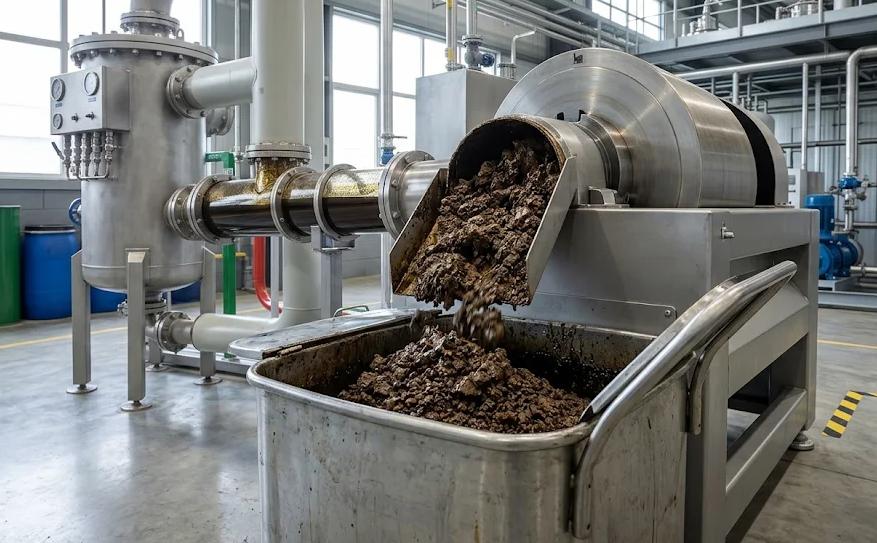
Special precautions need to be taken with regard to spent clay, as it might contain residual oil and concentrates. If not stored properly, there is a chance of leakage, soil pollution, and other hazards.
The following are some steps for effectively handling this substance:
- Storage of spent clay in appropriate, clearly labeled containers.
- Proper protection from rainwater.
- Use of an impervious floor and secondary containment if necessary.
- Isolation from incompatible materials and fire sources.
- Evaluation of oxidation, temperature, and fire hazards depending on the actual situation.
- Arrangement of testing and disposal.
It is not advisable to reuse or sell spent clay as an industrial material without ensuring that it meets the requirements.
For those plants where clay finishing is being done, filtration efficiency becomes important. The presence of too much residual oil in the filter cake shows that there are hydrocarbons going out of the process along with the solid waste.
How Does Refining Technology Affect Waste Generation?
Different process configurations produce different types of residues.
| Process configuration | Potential residues |
| Settling, filtration, and dehydration | Oily sludge, separated water, filter solids |
| Vacuum distillation | Heavy distillation bottoms |
| Acid treatment | Acid sludge |
| Clay finishing | Spent clay or oily filter cake |
| Hydrotreating | Process-specific spent catalyst and other treatment wastes |
This is just to give a few examples; it is not an exhaustive list applicable to all types of plants.
For instance, a vacuum distillation system followed by clay finishing can yield high amounts of distillation residue and spent clay. Hydrotreating in place of clay finishing would mean a different set of wastes generated without necessarily producing spent clay.
Hence, residue management should form part of process selection rather than equipment installation.
How Can a Plant Reduce Sludge and Waste Treatment Costs?
Waste management costs could be lowered by improving the control of the raw materials and processes.
- Improve raw material inspection. Inspect the incoming used oil and determine any presence of too much water and sediments. Remove any unsuitable raw materials before processing.
- Enhance the pretreatment. Effective settling, filtration, and dehydration minimize the contaminants that are being processed down the line.
- Optimize separation conditions. Steady conditions of operation would lead to improvement in the separation and lower oil wastage.
- Control adsorbent consumption. Choose the appropriate clay type in addition to the correct quantity, based on the quality of oil and product specifications.
- Monitor residue composition. Testing will allow the operator to detect any changes in sludge production and even in oil recovery.
This should not only involve producing less sludge. It means recovering the usable oil whenever possible, as well as properly disposing of residual sludge.
Consider Residue Management When Selecting Recycling Equipment
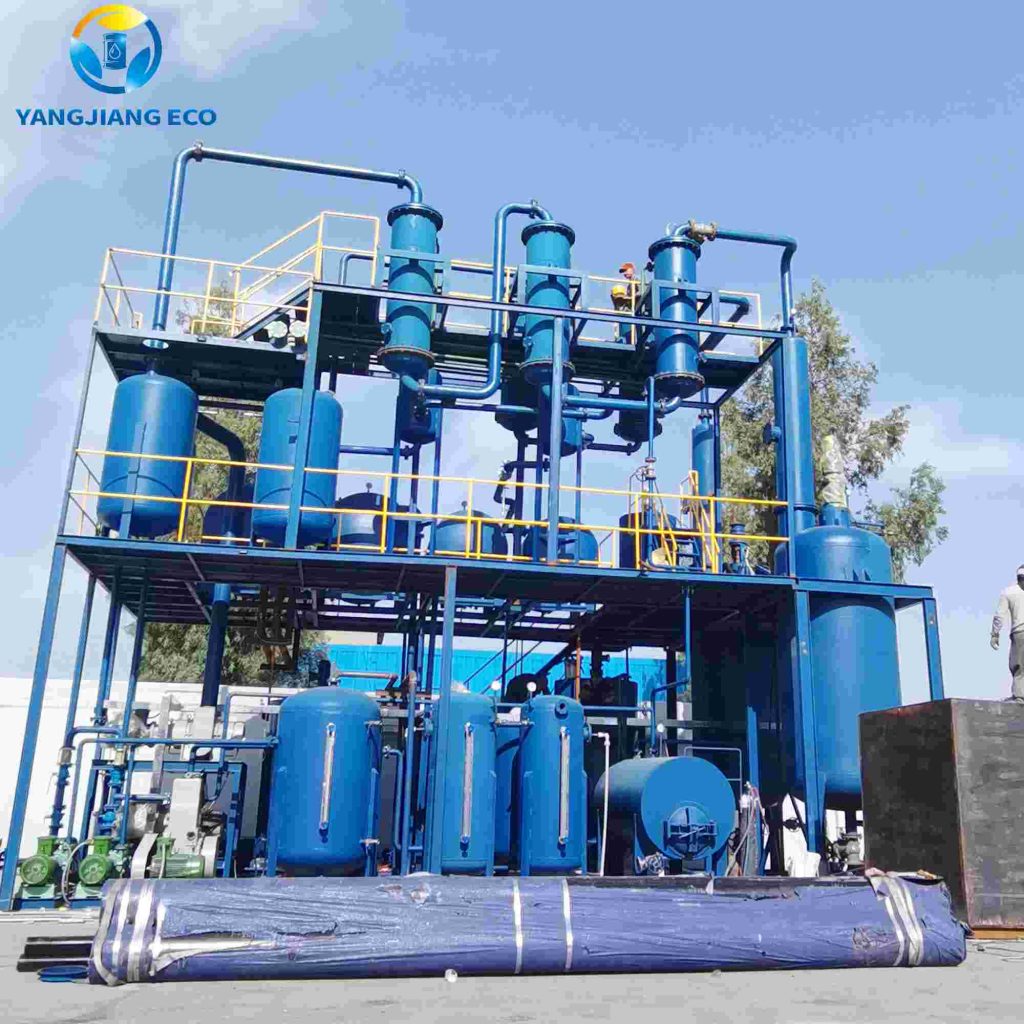
Besides considering the capacity and the output of the base oil from the waste engine oil recycling plant, investors need to consider other important factors such as feedstock preparation, water separation, vacuum distillation, removal of the heavy residue, oil finishing, effluent management, and residue management.
For those intending to recycle waste engine oil into re-refined base oil, it is advisable to configure the equipment based on the feedstock quality, the desired oil quality, the environmental conditions, and the waste management possibilities. The final product should also meet the required performance specifications. Read more about the quality parameters of re-refined base oil.
YANGJIANG offers solutions for projects involving the recovery and re-refining of waste engine oil for base oil recycling plants. The process configuration can be based on the feedstock properties, capacity, desired oil quality, and residue management needs.
Find out more about our Waste Engine Oil to Base Oil Recycling Machine.
However, if the project intends to recycle waste engine oil through distillation of fuel fractions instead of producing re-refined base oil, it would be useful to visit our Used Oil to Diesel Distillation Machine.
Final
Proper management of sludges and spent clay is an essential part of the work at the used oil re-refining plant. Due to the fact that various process flows produce different types of residue, it is necessary to choose methods depending on the nature of the respective flow.
Through proper pre-processing, optimization of separation and finishing operations, and waste handling from the start, plant operators are able to save on avoidable oil losses and enhance operational effectiveness.
A correctly developed used oil re-refining unit should take into account both the quality of the base oils recovered and proper handling of production residue.