

Mechanical Automation Engineer
Not all waste oils are equally suitable for the production of base oils.
Overall, used engine oil and relatively clean waste lubricating oil are the most suitable raw materials for producing base oils. However, the type of oil is only one of the considerations. Water content, sludge, fuel contamination, oil composition, and the consistency of raw materials all have significant impacts on the recovery process and overall economic benefits.
Therefore, if you have a source of waste oil and are considering producing base oils, a more appropriate question should not merely be “Which type of waste oil is the best?” but rather:
“Is my waste oil suitable for further refining?”
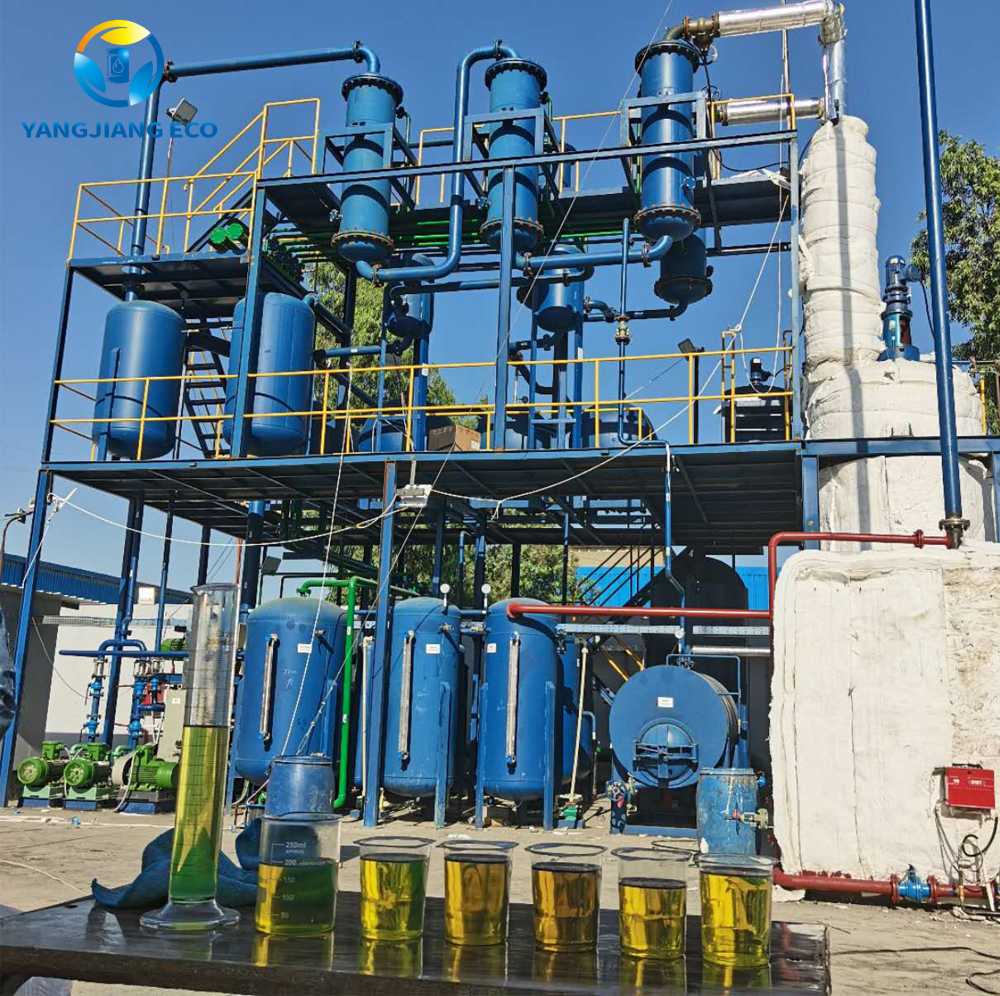
Which Waste Oil Is Best for Base Oil Production?
Different waste oils have different processing potential.
| Waste Oil Type | Suitability | Main Reason |
| Used Engine Oil | ★★★★★ | Widely available and contains valuable lubricating oil fractions |
| Used Lubricating Oil | ★★★★★ | Well suited to re-refining when contamination is manageable |
| Used Hydraulic Oil | ★★★★ | Can be processed when properly collected and separated |
| Used Gear Oil | ★★★★ | Contains recoverable lubricant fractions but may require suitable pretreatment |
| Highly Mixed Waste Oil | ★★ | Variable composition and higher contamination can increase processing difficulty |
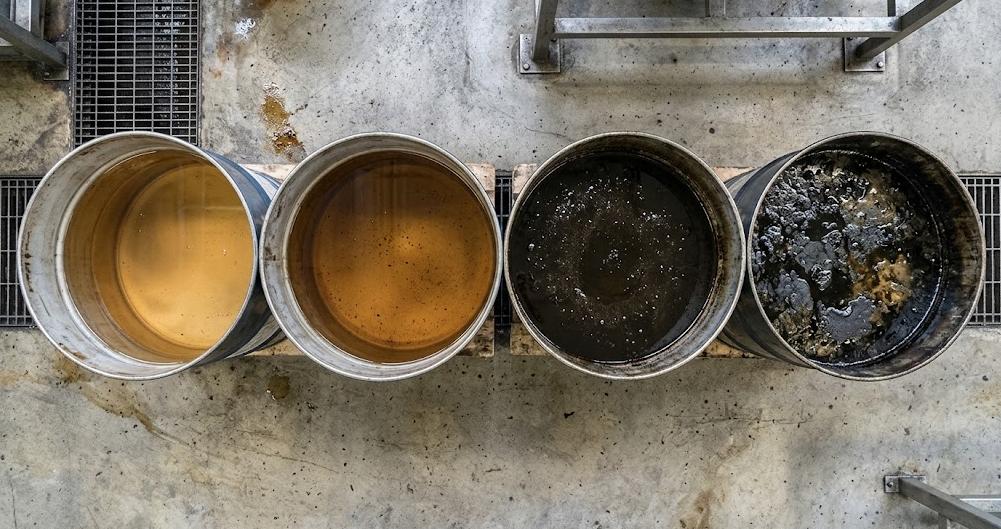
1. Used Engine Oil
Used engine oil is one of the most common feedstocks for used engine oil recycling.
Auto repair shops, service stations, transportation fleets, and industrial maintenance operations all continuously produce waste oil. More importantly, waste oil still contains a large amount of hydrocarbons. Through appropriate treatment and refining, these components are expected to be recycled and reused.
However, the composition of waste oil is not uniform.
It may contain:
- Water
- Oil sludge and sediment
- Metal particles resulting from wear
- Failed additives
- Gasoline or diesel dilution components
Therefore, the quality of the collected used engine oil is just as important as its source.
2. Waste Lubricating Oil
Other used lubricating oils can also be attractive feedstocks for a lube oil recycling plant, particularly when they are collected separately.
For example, hydraulic oil, gear oil, compressor oil, and various industrial lubricants.
If the source of the used lubricating oil is relatively clean and the composition is stable, the processing process will be simpler because the factory can design the process based on more predictable characteristics of the raw materials.
What Makes Waste Oil Good or Bad for Base Oil Production?
The most important factors are not complicated.
Better Feedstock
- Low moisture content
- Few sludge and sediment
- High lubricating oil content
- Less fuel pollution
- Component stability
- Stable supply
More Difficult Feedstock
- Excessive moisture content
- Heavy oil sludge
- Abundant sediment
- Presence of unknown chemical pollution
- Severely contaminated by gasoline or diesel
- Highly mixed composition of waste liquid
One point is often overlooked:
The cheapest waste oil is not necessarily the most economical raw material.
Low-cost raw materials may require a lot of pre-treatment, consume more energy, produce more residues, or require more complex processing procedures.
For commercial recycling projects, the quality, supply situation, and component stability of the raw materials should be comprehensively evaluated.
Can Any Waste Oil Be Converted Into Base Oil?
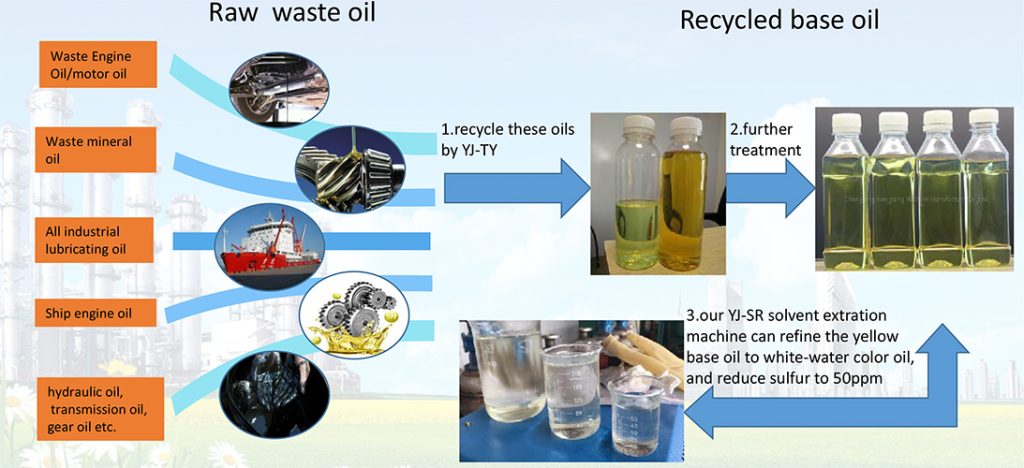
A lot of waste lubricating oil has processing potential, but this does not mean that all waste oils are economically suitable for producing base oil.
Depending on the raw materials and the quality of the desired product, this process typically consists of the following stages:
Waste oil → Pre-treatment → Dehydration → Vacuum distillation → Purification → Base oil
Pre-treatment helps to remove moisture, solid particles, sludge and other impurities before entering the main refining stage.
Subsequently, vacuum distillation can separate the useful oil fractions under reduced pressure; depending on the specifications of the target base oil, further purification treatment may also be required.
Therefore, there is no “universal” recycling process that is suitable for all types of waste oil.
The appropriate process should be selected based on the specific raw materials.
How Does Waste Oil Quality Affect Base Oil Production?
The quality of raw materials not only affects the technical processes of the recycling factory, but also influences its economic benefits.
For instance, excessive moisture content will increase the demand for dehydration treatment; heavy oil sludge and solid impurities may increase the burden of filtration and residue disposal; fuel contamination will change the composition of the raw materials, thereby affecting the separation effect.
The expected recovery rate of base oil also depends on the following factors:
- Ingredient composition
- Water and sediment content
- Fuel dilution degree
- Distillation characteristics
- Pre-treatment efficiency
- Refining and purification technology
Therefore, it is not appropriate to preset a uniform recovery rate for all types of waste oil.
The actual recovery rate should be evaluated based on the specific raw materials.
How Do You Know if Your Waste Oil Is Suitable?

If you are planning to build an oil waste recycling and treatment plant, it is a practical step to conduct a test on the raw materials before purchasing the equipment.
Depending on the specific project situation, valuable reference information may include:
- Water content
- Content of sediment or oil sludge
- Viscosity
- Flash point
- Ash or residue
- Basic components
- Distillation characteristics
Before negotiating with the manufacturers of recycling treatment equipment, you may not necessarily need to conduct detailed laboratory analyses first. Even basic information such as the source of the oil, the expected processing volume, the pollutant situation, and the existing test results can help engineers understand the project overview.
For example, there are significant differences in the following two situations:
10 tons of waste engine oil collected separately every day
With
10 tons of mixed industrial waste oil containing water and unknown chemical substances every day
Although the processing scale is the same, the applicable process flow and equipment configuration may be completely different.
Want to Turn Your Waste Oil Into Base Oil?
If you have waste engine oil or other waste lubricants, before choosing a waste oil recycling facility, the first step is to fully understand the characteristics of your raw materials.
Please provide us with the following information:
- Type of waste oil
- Quantity of waste oil
- Source of waste oil
- Target base oil products
- Existing oil analysis data
Our engineers will evaluate your raw materials and recommend suitable waste oil regeneration processes and factory configuration plans for your project.
Have waste oil available? Please contact us to obtain a preliminary recycling and treatment plan.