
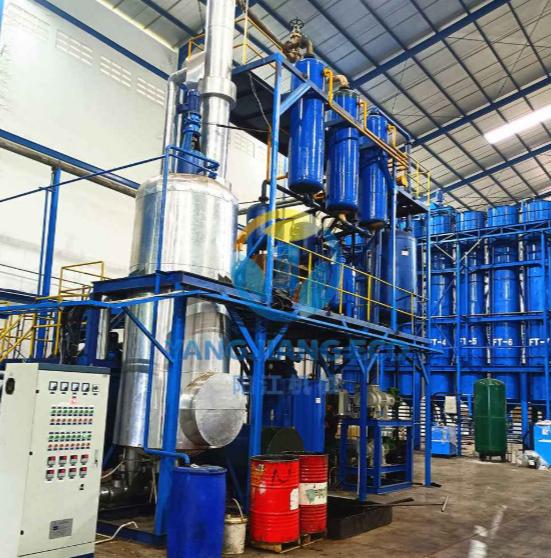
Mechanical Automation Engineer
The waste lubricating oil in Saudi Arabia mainly comes from the automotive, transportation, construction and industrial sectors. With the increase in vehicle ownership and the expansion of industrial scale, the collection of waste oil is distributed among different enterprises and regions, and there are differences in raw material quality, collection methods and factory requirements.
For companies planning to build or operate waste oil recycling plants, the key is not the recycling principle itself, but the raw material supply, pre-treatment, processing capacity, storage conditions and the quality of recycled oil.
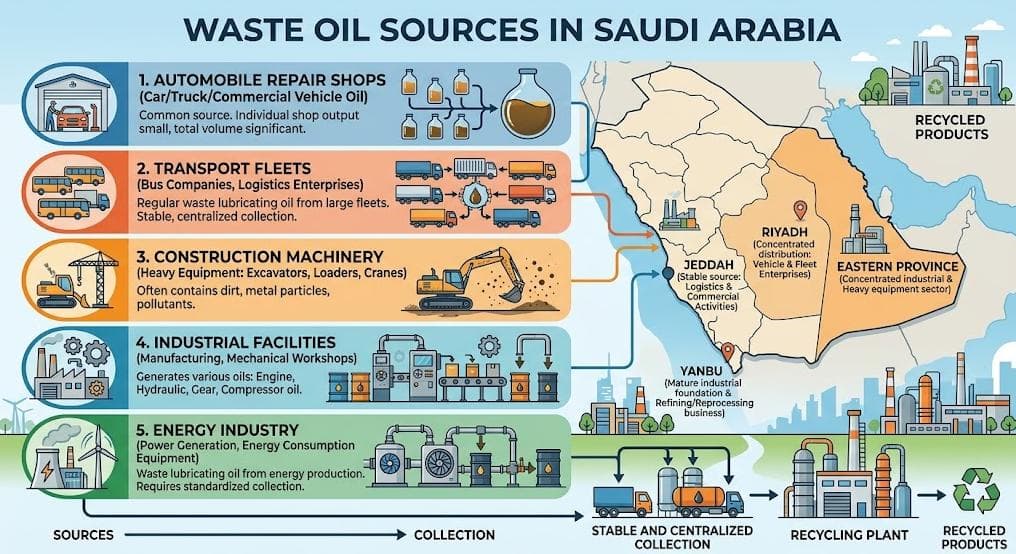
Waste Oil Sources in Saudi Arabia
The raw materials for the recycling plant are sourced from various locations, and the waste oils from different sources have differences in their oil properties and collection methods.
- Automobile repair shops: Waste engine oil from passenger cars, trucks, and commercial vehicles is a common source. A single small repair shop has a limited output, but when a large number of repair shops collect together, the total amount is still considerable.
- Transport fleets: Public transportation companies, logistics enterprises, and large fleets regularly produce waste lubricating oil, which is an important source for stable and centralized collection.
- Construction machinery: Waste oil from heavy equipment such as excavators, loaders, cranes, and generators usually contains more dirt, metal particles, and other pollutants.
- Industrial facilities: Manufacturing plants, mechanical operations, and maintenance workshops not only produce waste engine oil but also generate waste lubricating oils such as hydraulic oil, gear oil, and compressor oil.
- Energy industry: Power generation and other high-energy-consuming equipment also produce waste lubricating oil, which requires standardized collection and treatment.
The density of waste oil collection varies in different regions. Riyadh has a relatively concentrated distribution of vehicle and fleet-related enterprises, while Jeddah has a stable source based on logistics and commercial activities. The Eastern Province has a relatively concentrated industrial and heavy equipment sector, and Yanbu has a mature industrial foundation and refining and reprocessing business.
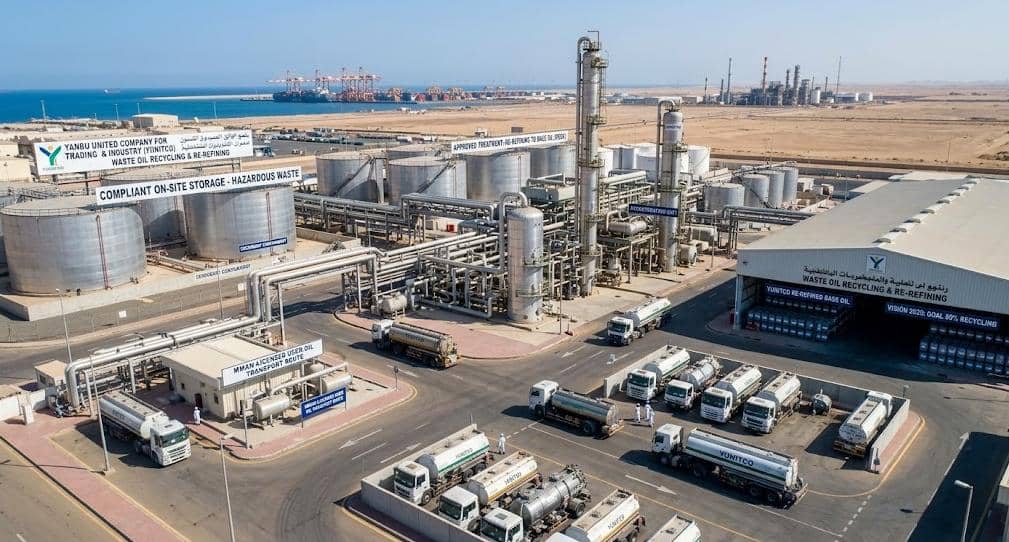
Waste Oil Recycling in Riyadh, Jeddah, Dammam and Yanbu
There are differences in the collection of waste oil in the major commercial and industrial centers of Saudi Arabia, mainly depending on the source and type of the waste lubricants.
- Riyadh has a large number of auto repair shops, transportation fleets, and construction enterprises, and the waste oil mainly includes used engine oil and other lubricants.
- Jeddah is mainly focused on logistics, commercial transportation, and vehicle maintenance. The sources of waste oil mainly come from repair shops and fleets, and the quality of raw materials from different suppliers may vary.
- Dammam and the Eastern Province have a higher concentration of industries and heavy equipment. The waste oil mainly comes from manufacturing, machinery, energy-related enterprises, and fleet maintenance. Therefore, higher requirements for raw material testing and classification are necessary.
- Yanbu is mainly focused on petrochemicals and manufacturing. Industrial enterprises are relatively concentrated, and there are related waste oil re-refining businesses, which can provide a more centralized source of raw materials.
For waste oil recycling facilities, the location selection should not only consider the amount of waste oil generated. Collection distance, supplier concentration, raw material quality, and supply stability will also directly affect the operational efficiency of the factory.
Choosing a Waste Oil Recycling Plant Capacity
The production capacity of the waste oil recycling plant should be determined based on the actual available oil quantity that can be collected, rather than simply choosing the largest production line.
| Capacity | Typical Application |
| 5–10 TPD | Small-scale processing |
| 20 TPD | Small to medium operation |
| 50 TPD | Established collection network |
| 100 TPD+ | Industrial-scale operation |
TPD stands for tons per day. The larger the production line, the higher the requirement for stable raw material supply. If the collection volume fluctuates greatly, the equipment may not be able to reach the rated capacity, thereby reducing the overall process efficiency.
When determining the production capacity, the following factors should be given priority consideration:
- Raw material quantity: Estimate based on the actual monthly collection volume, rather than the theoretical amount of waste oil generated.
- Raw material quality: The content of water, sludge and pollutants will affect the pretreatment requirements and processing performance.
- Final product: Factories that produce different grades of recycled oil may have different process configurations from single-product factories.
- Future expansion: If it is expected that the raw material supply will increase, adopting a modular design or reserving processing capacity is usually more practical than installing an oversized production line at one time.
Read more: What Capacity Used Oil Recycling Plant Do You Need?
Key Considerations for Waste Oil Recycling Projects in Saudi Arabia
- Raw material testing should be incorporated into the project plan. Even if they come from the same source, the components of waste oil rarely are completely identical. Basic testing can include moisture, sediment, viscosity, ash content, and other contaminants. The test results can be used to determine the pre-treatment requirements, as well as whether waste oil from different sources should be mixed or treated separately.
- Collection and storage also affect the factory’s operation. Even if the nominal processing capacity is sufficient, improper collection organization can lead to unstable supply. Long-term raw material sources can include repair shops, transportation companies, fleet operators, construction contractors, and industrial facilities. The layout of storage tanks should reasonably separate raw materials, treated oil, and finished products.
- Site and operation conditions should also be included in the factory design. Wastewater, solid residues, and other by-products need to be properly treated. In addition to the main refining equipment, public facilities, equipment layout, storage tank capacity, and maintenance channels should also be planned. The high-temperature climate in Saudi Arabia can also affect the selection of equipment such as storage tanks, pumps, pipelines, and seals.
When using vacuum distillation or other thermal treatment systems, operation control is particularly important. Since the components of different batches of raw materials may vary, the equipment should support the adjustment of processing parameters, rather than treating each batch of raw materials under the same conditions.
Summary
Regional factors, raw material sources, and the existing collection network influence the recycling and utilization of waste oil in Saudi Arabia. The raw material conditions in Riyadh, Jeddah, Dammam, and Yanbu differ, so the quality of raw materials, factory capacity, and site selection are important factors in project planning.
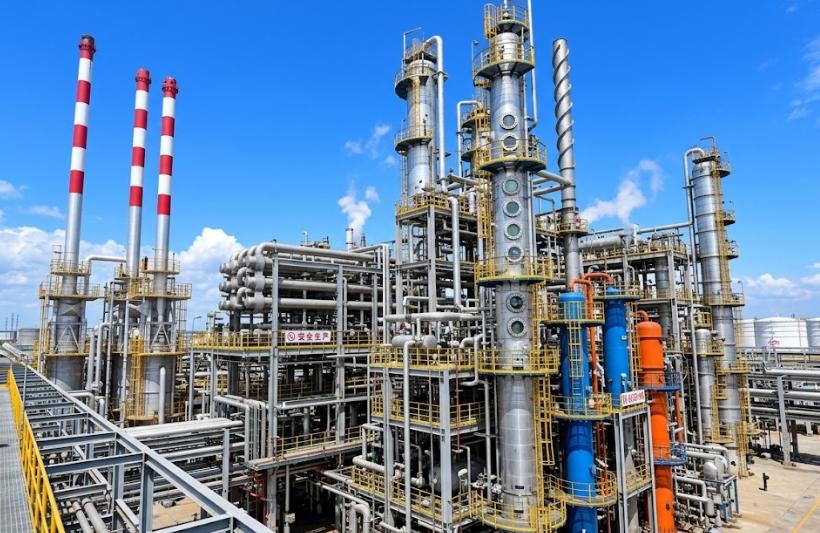
For enterprises that build or upgrade waste oil recycling facilities, the processing system should be configured according to the actual oil characteristics and the expected daily processing volume. YANGJIANG waste oil recycling plants can be customized based on capacity and raw material conditions, and equipped with processes such as filtration, dehydration, distillation, and oil purification. Please contact us to provide your raw material information, and we will recommend an appropriate factory configuration plan based on actual needs.