

Mechanical Automation Engineer
The operating environment of the waste oil recycling plant is rather complex. The waste oil may contain water, oil sludge, metal particles, additives, and other impurities. As the operating time increases, problems such as unstable vacuum, scaling, decreased oil output rate, poor product quality, and equipment failures may reduce production efficiency and increase operating costs.
Most of these problems are related to a few process or equipment factors. This guide introduces common faults in the waste oil recycling plant, typical causes, and items that operators should prioritize checking.
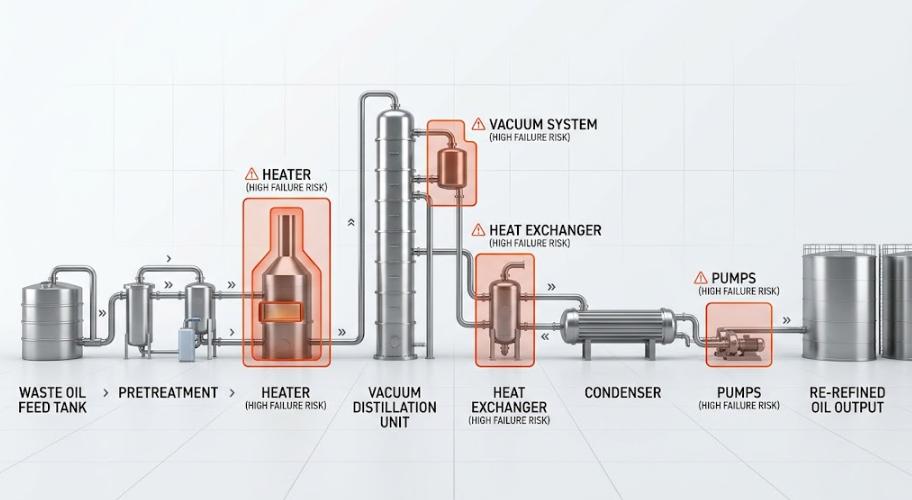
Vacuum Problems in Waste Oil Recycling Plants
Unstable or insufficient vacuum is a common problem in the waste oil distillation process, which can affect the evaporation conditions, separation efficiency, energy consumption and the overall processing capacity of the device.
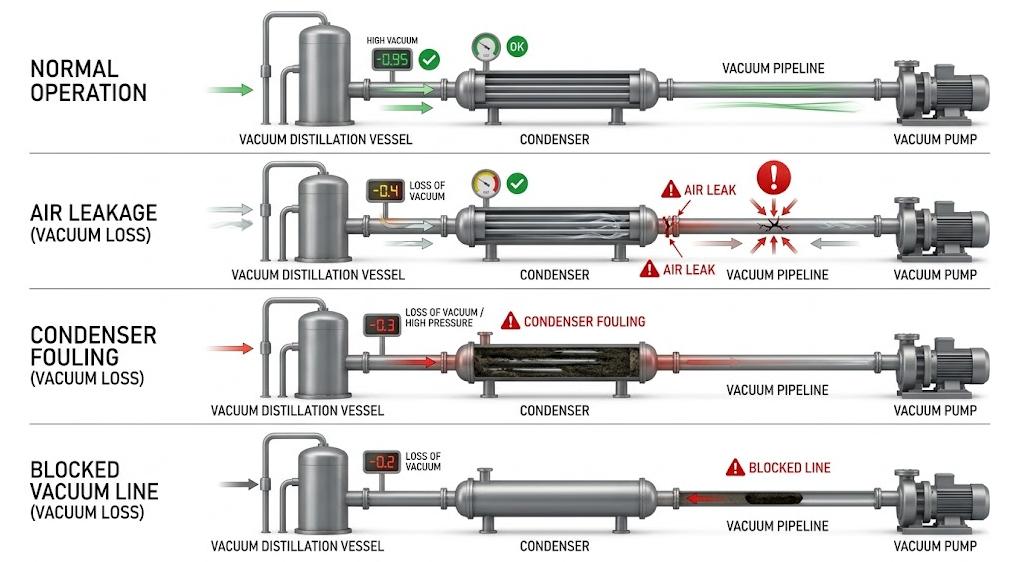
Common symptoms include:
- The system cannot reach the required vacuum level
- Vacuum pressure fluctuates during operation
- The distillation process is unstable
- Processing capacity decreases
- Batch fluctuations in product quality
Typical causes include:
- Air leakage in flanges, valves, seals, or pipes
- Insufficient performance of vacuum pumps or ejectors
- Scaling inside the condenser
- Blockage or too small a diameter of vacuum lines
- Excessive steam load
- Inappropriate feed rate
Fault diagnosis should be carried out based on specific symptoms. If the vacuum level suddenly drops, first check for air leakage and the performance of the vacuum equipment. If the vacuum performance gradually decreases, check for scaling or blockage in the condenser and vacuum lines. If the vacuum level remains stable under low load but drops when the feed rate is increased, check the steam load and the system processing capacity.
Fouling and Heating Problems in Waste Oil Recycling Equipment
Scale formation is one of the main reasons for the decline in the performance of waste oil recovery equipment. Oil sludge, carbon deposits and heavy pollutants may accumulate in heaters, heat exchangers, distillation vessels, condensers and pipelines.
Scale formation reduces heat transfer efficiency. As the deposits thicken, the equipment requires more energy to maintain the same operating temperature, and its processing capacity gradually decreases.
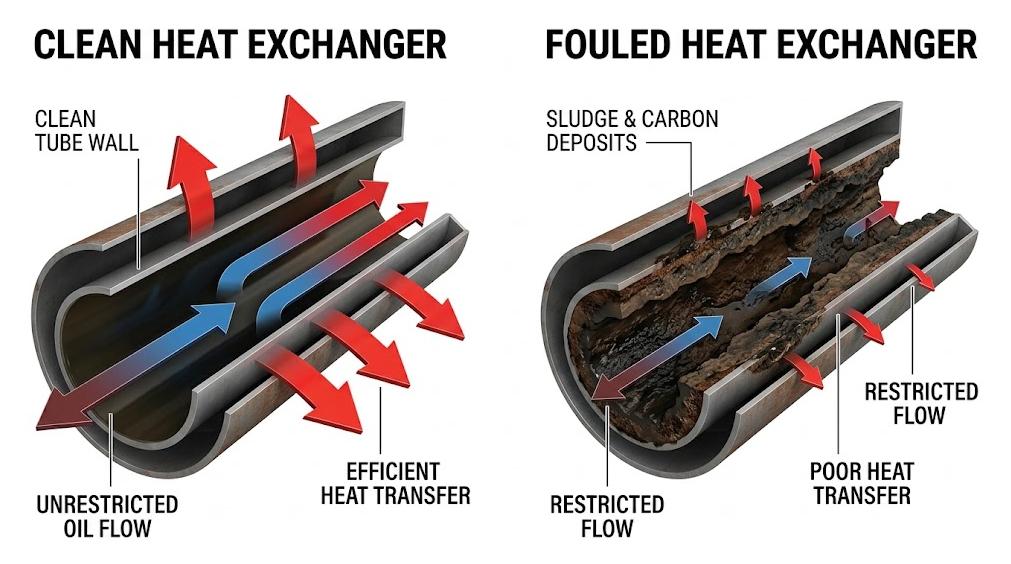
Common causes include:
- High content of oil sludge or solids in the raw materials
- Insufficient filtration
- Insufficient pre-treatment
- High heating temperature
- Long material residence time
- The waste oil contains a large amount of heavy pollutants
Operators should monitor pressure drop, heating efficiency, temperature stability and energy consumption changes. If the heating required to achieve the same production output continues to increase before raising the heating temperature, it is necessary to check for scale formation before doing so.
Good raw material pre-treatment and regular inspections help reduce unexpected downtime and cleaning requirements.
Low Oil Yield and Distillation Problems
Low oil yield is usually an early sign that the operation of the waste oil recovery device deviates from the expected conditions, but the problem may not necessarily come from the distillation temperature.
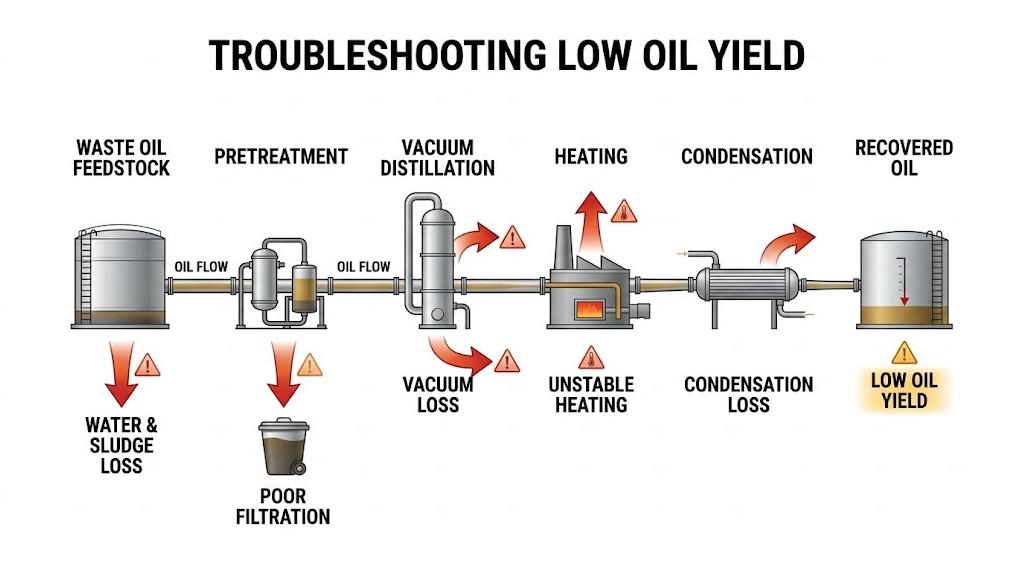
The main inspection steps include:
- Raw material quality: High moisture content, high content of sludge and heavy impurities will reduce the amount of recoverable oil.
- Pre-treatment: Inadequate dehydration or filtration will affect the subsequent distillation and increase oil loss.
- Vacuum degree: Insufficient vacuum will change the actual evaporation conditions and reduce the separation efficiency.
- Heating: Unstable heating or improper heating rate may lead to incomplete evaporation or excessive thermal stress.
- Condensation: Failure of steam to be effectively condensed and collected will result in the loss of some recoverable oil.
It is recommended to investigate in the following order:
Raw materials → Pre-treatment → Vacuum → Heating → Condensation → Residue
Check each item in this order to help locate the loss point and avoid adjusting multiple operation parameters simultaneously.
Read more: Why Is Your Waste Oil Recycling Yield Lower Than Expected?
Poor Product Quality and Unstable Re-Refined Oil
The recycling plant may reach the expected output, but the quality of the oil remains unstable. Common manifestations include darker oil color, pungent odor, excessive moisture content, fluctuating viscosity, low flash point, and improper proportions of light and heavy components.
These problems are usually related to raw material fluctuations and operating conditions.
Common causes include:
- Inconsistent composition of waste oil
- Incomplete dehydration
- Poor component separation effect
- Excessive heating
- Unstable vacuum degree
- Insufficient filtration or pre-treatment
If there is a significant difference in the quality of different batches of products, before making major process adjustments, it is necessary to first check the feed quality and operating conditions.
For factories producing recycled base oils, quality control should also include regular laboratory tests. Relevant technical indicators such as viscosity, flash point, moisture content, sulfur content, color, and others should be monitored according to the final use of the product.
Pump, Valve and Control System Failures in Waste Oil Recycling Plants
Even if the main refining process is operating normally, mechanical and control system failures can still lead to unexpected shutdowns.
Pump failures may manifest as insufficient flow, abnormal vibration, overheating, or repeated failure of seals. Common causes include high viscosity of the raw materials, solid particles or sludge entering the pump, cavitation, insufficient filtration, and improper pump selection.
Valve and pipeline failures typically result in blockages, leaks, excessive pressure drop, or unstable flow. When pre-treatment is inadequate, solid contaminants and heavy oil are more likely to cause severe blockages or operational abnormalities.
The control system may provide incorrect data due to faults in temperature sensors, vacuum gauges, level sensors, or control valves, leading operators to make unnecessary process adjustments.
For example, when the temperature reading is inaccurate, operators may continue to increase the heating intensity even when the actual temperature is already too high.
Therefore, when process parameters suddenly become abnormal, one should first verify the instrument readings and equipment status, and then adjust the process parameters.
Quick Waste Oil Recycling Plant Troubleshooting Checklist
| Problem | First Things to Check |
| Vacuum unstable | Air leaks, vacuum pump, condenser |
| Low oil yield | Feedstock, dehydration, vacuum, heating |
| Dark product | Overheating, residence time, feedstock |
| Excessive fouling | Filtration, sludge, heating conditions |
| Pump failure | Solids, viscosity, cavitation |
| Product quality fluctuates | Feedstock and operating parameters |
| High energy consumption | Fouling and heating efficiency |
Most of the faults of the waste oil recovery plant are related to the quality of raw materials, pre-treatment, vacuum performance, heating, condensation or equipment maintenance. When a fault occurs, one should not immediately replace individual components; instead, one should first check which links in the process deviate from the normal operating conditions.
If the device experiences recurring faults, it is recommended to provide the experienced engineering team with information such as the type of raw materials, processing capacity, operating conditions and specific fault phenomena. These pieces of information can help identify the root cause of the fault and formulate appropriate technical solutions.