
Mechanical Automation Engineer
In the current industrial waste oil recycling market, pure single raw materials are becoming increasingly rare, and mixed waste oils have become the mainstream. Oil refineries must deal with complex mixtures consisting of used automotive lubricants, marine heavy oil, black diesel residue, and industrial hydraulic oil.
For oil refinery owners and investors, the core objective is straightforward: to reduce operating costs while increasing the conversion rate of waste oil to diesel. To achieve this goal, the traditional intermittent distillation method is no longer sufficient.
You need industrial-grade technology specifically designed for mixing raw materials. Through precise temperature control and efficient separation, unstable waste oil can be transformed into stable commercial diesel.
Why Mixed Feedstocks Challenge the Waste Oil to Diesel Process
Processing mixed raw materials is extremely complex, and conventional distillation equipment is unable to handle it. There are mainly three issues:
- Large temperature differences: Waste oil is a type of heavy, long-chain hydrocarbons (C20-C50), while black diesel or pyrolysis oil is a type of light, volatile hydrocarbons (C10-C20). Ordinary cracking systems cannot precisely separate them, which will cause the valuable light fractions to turn into exhaust gas, while the heavy fractions will be mixed into the final refined oil.
- System prone to coking: The mixed raw materials contain complex impurities such as asphaltene, heavy polymers, and additives. At high temperatures, these impurities are highly prone to coking, forming carbon deposits on the inner walls of heat exchangers and pipelines. This not only hinders heat conduction and increases fuel consumption but also may cause local overheating.
- Catalyst poisoning: Heavy metals, sulfur, and halogen compounds present in the mixture can damage the catalyst’s activity, accelerate its failure, and significantly increase the cost of catalyst replacement.
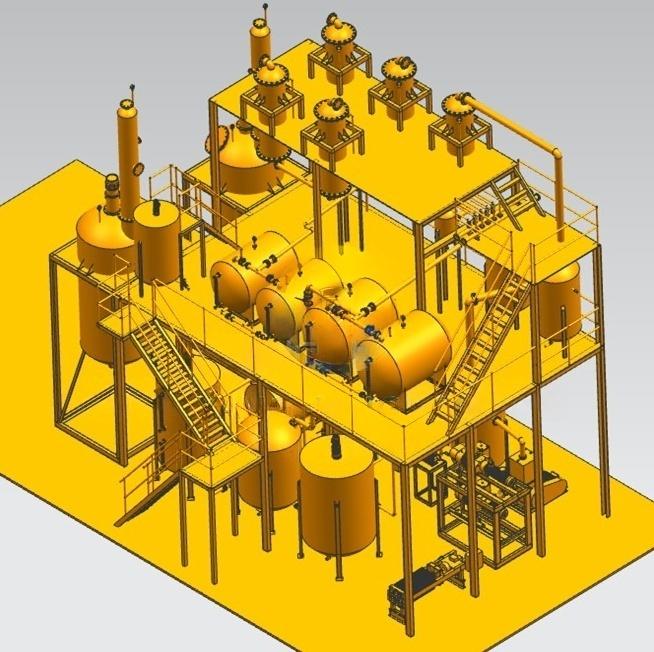
Critical Engineering Steps to Maximize Conversion Rates
Multi-Stage Automated Pre-Treatment
To increase the yield of waste oil to diesel, the key lies in the process before entering the distillation tower. By carrying out a two-step pre-treatment, the raw materials can be stabilized:
- Filtering: Using mechanical and centrifugal methods, large particles and surface moisture are quickly removed.
- Flash evaporation: Under mild heating and vacuum conditions, the emulsified water and light solvents are evaporated.
- Effect: This can prevent liquid flooding or temperature spikes in the subsequent oil towers, ensuring that the oil flow entering the main tower is pure, free of water, and uniform.
Precision Fractional Distillation via Advanced Columns
The pre-treated oil is subjected to core separation in the fractionating tower. Unlike ordinary single-stage flash tanks, the fractionating tower is equipped with trays or packing, which enables the upward-moving steam and the downward-moving liquid to have sufficient contact, achieving efficient mass transfer and heat transfer.
[Mixed raw materials] ─→ [Pre-treatment] ─→ [Fractionating tower] ─→ [Vacuum cracking] ─→ [High-purity diesel]
Due to the frequent fluctuations in raw material composition, the fractionating tower is equipped with multiple temperature sensors and reflux ratio controllers. By dynamically adjusting the temperatures at different heights within the tower, the system can precisely control the boiling point range of high-purity diesel within the range of 180°C to 360°C.
This can prevent heavier paraffin or asphaltene from being mixed into the distillate oil, thereby ensuring that the product quality is not affected by changes in the raw materials.
Vacuum Catalyst Protection Systems
Carrying out the primary cracking and separation under deep vacuum is the key to protecting the catalyst and increasing the total oil recovery rate.
Reducing the system pressure can lower the boiling point of heavy hydrocarbons, allowing large molecules to vaporize at a lower temperature. This can prevent excessive cracking and prevent the usable oil from turning into coke or non-condensable gases.
The vaporized molecules then enter the catalytic reactor. Since the heavy impurities remained at the bottom of the distillation tower, the catalyst only came into contact with the pure hydrocarbon vapor. This prevents catalyst fouling, extends its lifespan, and maintains stable activity, thereby maximizing diesel production.
Maximizing Yield and Purity with YJ-DSL Distillation Technology
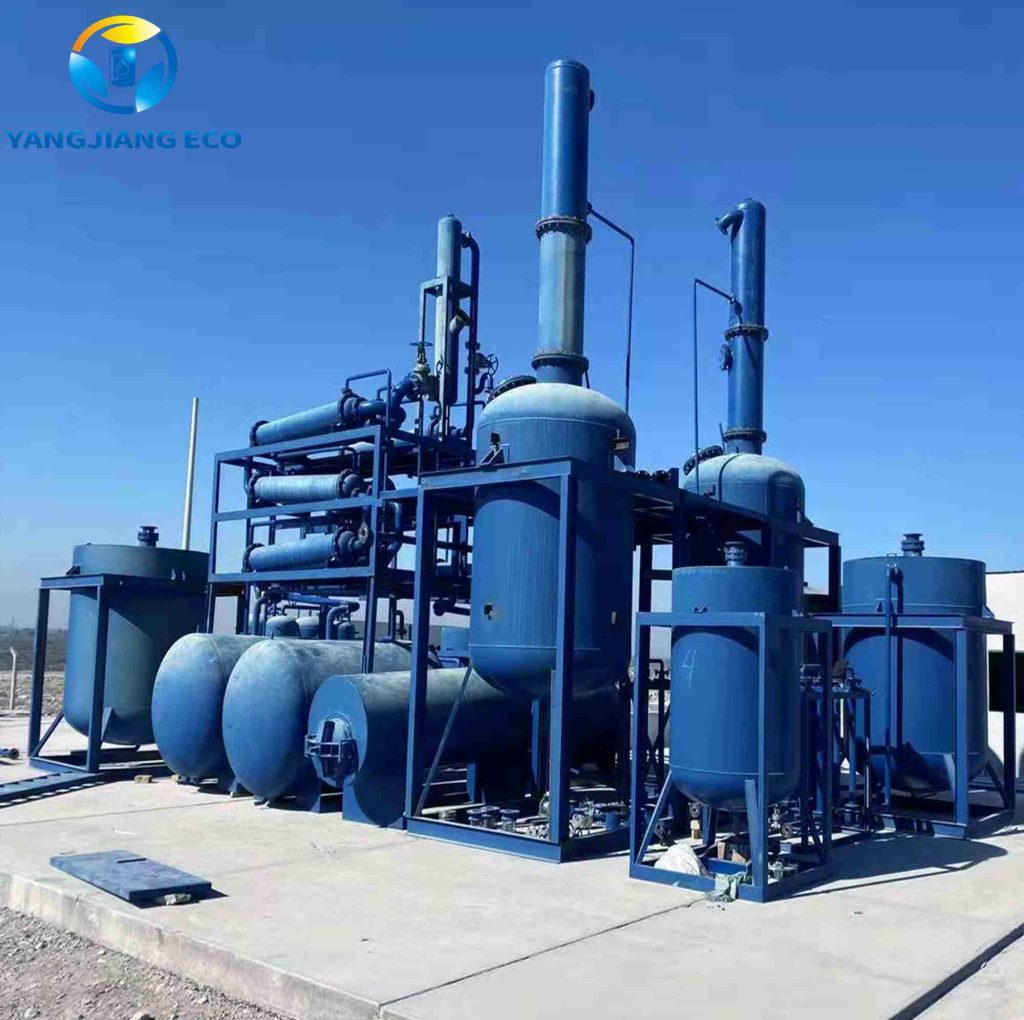
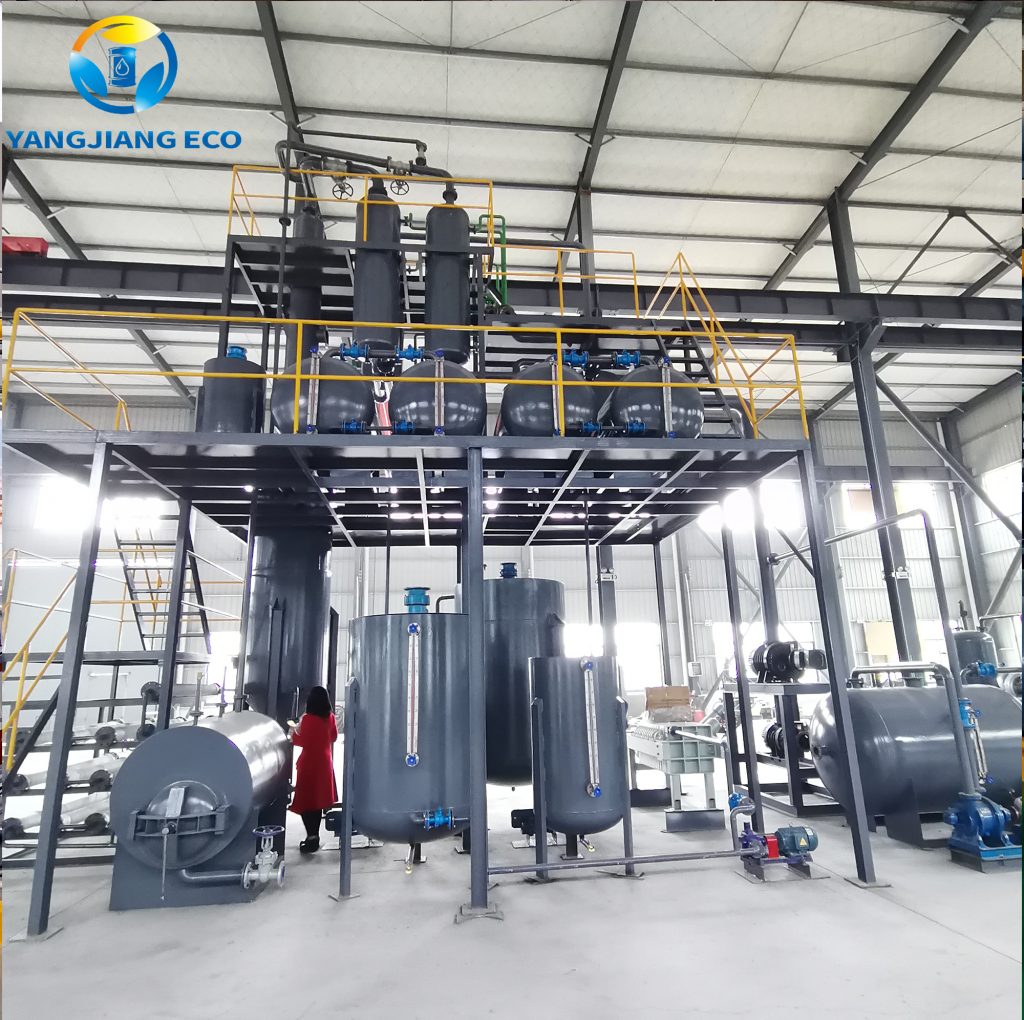
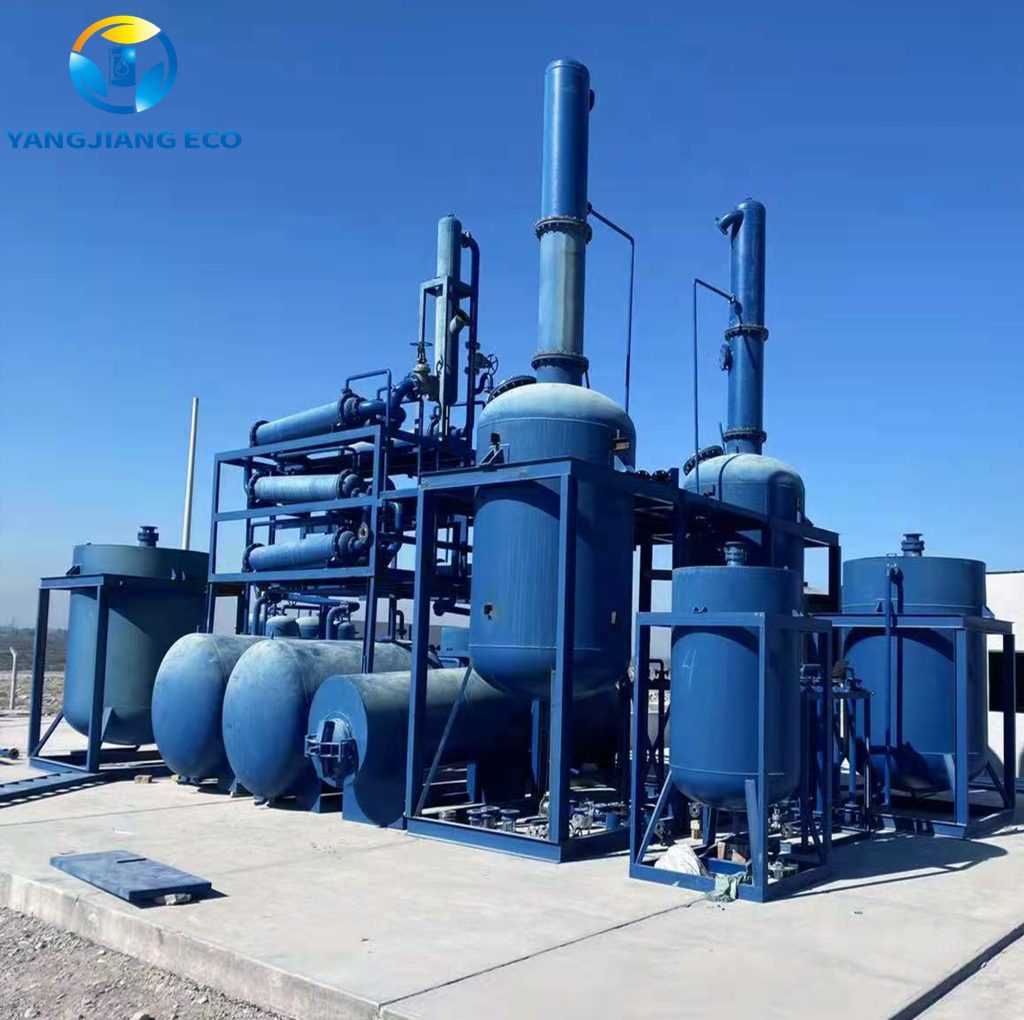
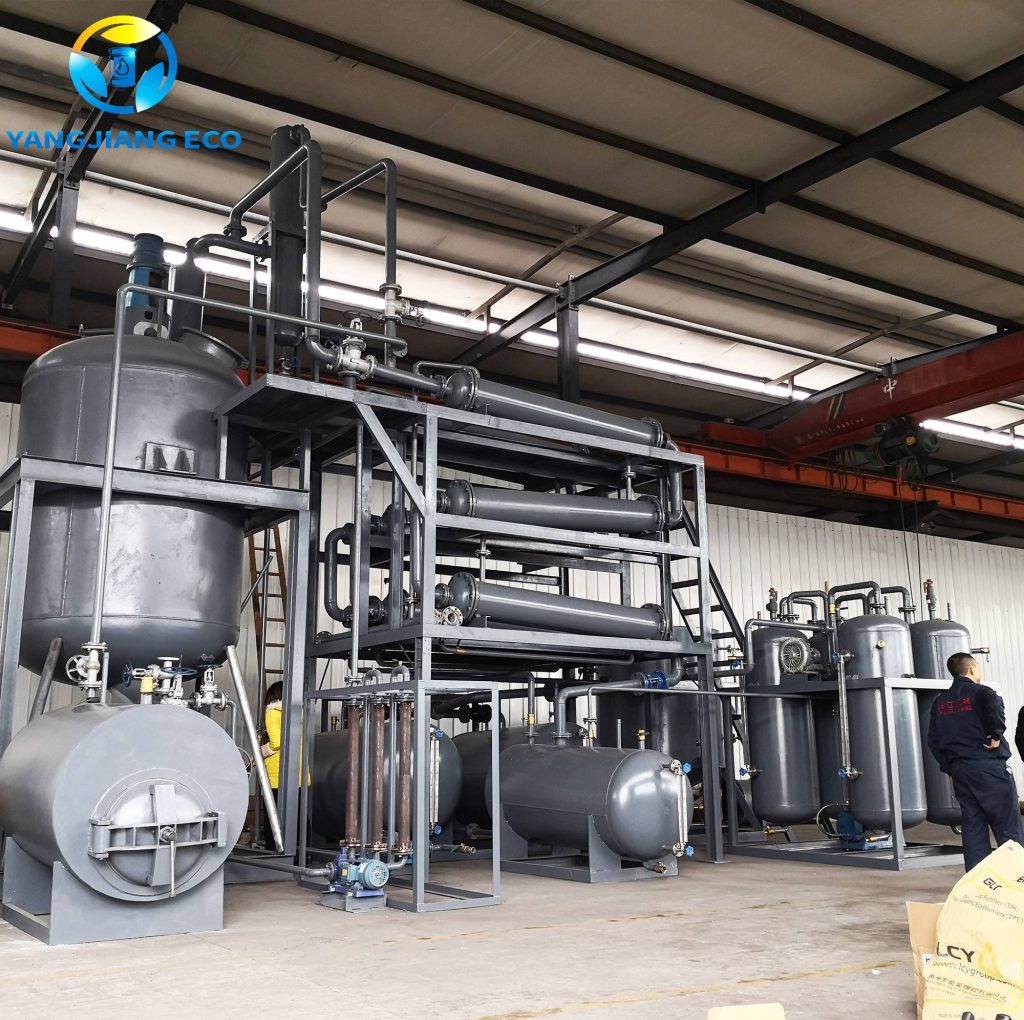
For large-scale industrial operations, the YJ-DSL waste oil to diesel distillation plant can handle complex raw materials. Compared to traditional batch-type equipment, it is specifically designed for efficient continuous operation and has the following core advantages:
- Continuous operation: Say goodbye to intermittent processing. Keep the distillation tower running stably to avoid efficiency decline and thermal stress.
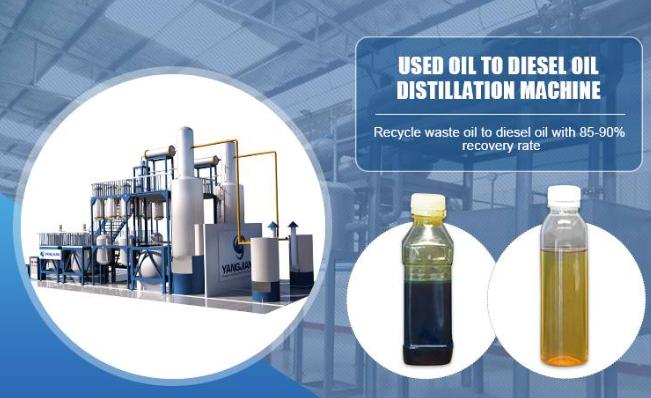
- High conversion rate: Through the combination of multi-level fractionation and dry vacuum pyrolysis, the conversion rate of waste oil into diesel can reach as high as 85% to 90%.
- Deep refinement: Built-in decolorization and deodorization processes effectively remove sulfides and unstable hydrocarbons.
- High-quality finished product: Produces golden-yellow, stable and clean diesel, suitable for industrial burners, agricultural machinery and generators. It helps you sell at a good price.
Best Practices for Operating Industrial Mixed-Oil Distillation Plants
To maintain efficiency and protect the equipment when handling unstable waste liquids to produce clean diesel, the operators should follow the following procedures:
- Uniform raw material mixing: Avoid directly pumping in raw materials with significant fluctuations. Use dedicated storage tanks to homogenize lubricating oil, marine oil, and heavy waste liquids to prevent thermal shock and maintain process stability.
- Monitor the pressure difference of the fractionating tower: Continuously track the pressure changes within the tower. A sudden increase in pressure indicates the accumulation of polymers or coking. Based on this, technicians can carry out maintenance to prevent complete blockage.
- Maintain vacuum integrity: Regularly inspect the flanges, seals, and vacuum pump. Minor leaks can cause internal oxidation, fuel discoloration, and a significant reduction in the efficiency of vacuum cracking.
- Recovery of non-condensable gases: Collect the light non-condensable hydrocarbons produced during distillation and return them to the heating furnace as auxiliary fuel. This measure can significantly reduce external energy consumption and overall operating costs.
Final
Processing mixed raw materials does not necessarily reduce profits or affect the quality of the oil. Modern waste oil refining technology, through precise design and a stable system, can easily handle the complex chemical components.
Through pre-treatment, staged control, and deep vacuum processing, the factory can protect the equipment while maintaining a high conversion rate. Investing in a comprehensive system like YJ-DSL not only enables flexible use of various raw materials and improvement of energy efficiency, but also turns waste into a stable and profitable commercial asset.
Recommended Products