
Mechanical Automation Engineer
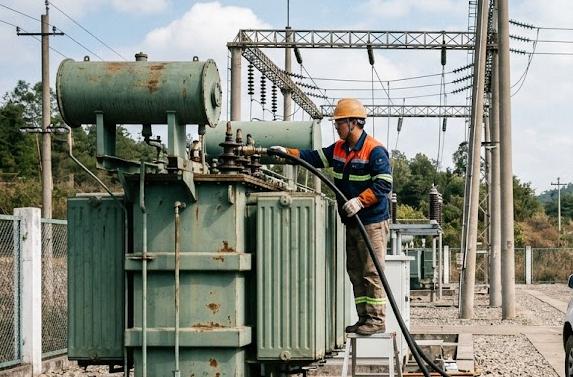
Transformer oil provides electrical insulation and heat dissipation for the high-voltage power grid. However, long-term exposure to thermal stress, electrical stress, and oxidative stress can cause the oil to deteriorate, thereby reducing the safety and efficiency of the transformer.
In the past, power companies often directly discarded and replaced the deteriorated oil. Nowadays, due to fluctuations in oil prices, increased costs for handling hazardous waste, and strict ESG compliance requirements, the economic viability of direct oil replacement has significantly declined.
The power company and industrial factories are faced with a crucial choice: to continue purchasing new oil, or to opt for on-site transformer oil regeneration?
Why Is Traditional Oil Replacement Failing Utilities?
Replacing the aged transformer oil directly affects the total cost of ownership (TCO) of the project:
- Procurement cost fluctuations: The price of insulating oil is affected by fluctuations in the crude oil market. Large-scale replacements result in high CAPEX, which raises the maintenance budget.
- The cost of waste disposal is rising: Degraded oil contains acidic substances, oxidation by-products and sludge, which are classified as hazardous waste. Compliance with disposal and transportation involves high costs and potential legal liabilities.
- High maintenance costs: Emptying the fuel tank, cleaning the sludge, vacuuming in the oil and stabilizing the oil quality take an extremely long time. Power outage during shutdown directly leads to revenue loss and regulatory penalties.
The ROI Calculation: How Much Can Regeneration Really Save?
Compared with purchasing new oil and paying for the disposal of used oil, the on-site transformer oil regeneration technology can directly restore the existing oil to the standard of new oil at the substation.
Take a typical 110kV/220kV power transformer containing approximately 20 tons of insulating oil as an example:
| Cost Breakdown Metric | Traditional Oil Replacement | On-Site Oil Regeneration |
| Material Procurement | High (100% new oil purchase) | Minimal (Only consumable adsorbents & minor power) |
| Hazardous Waste Disposal | High (Disposal fees for 20 tons of waste) | $0 (Oil remains in service) |
| Logistics & Transportation | High (Heavy tanker transport required) | Low (Single mobile processing unit on-site) |
| System Outage Duration | Long (3–5 days complete shutdown) | Minimal (Supports live/online processing) |
| Overall Cost Reduction | Baseline (100%) | 60% to 80% Total Savings |
Operational costs reduced by 60% – 80%: Elimination of costs for purchasing new oil and disposal of hazardous waste. Short investment recovery period: By introducing a recycling system, the equipment investment cost can usually be recovered by handling 3 to 5 large transformers.
Can Regenerated Transformer Oil Match New Oil Standards?

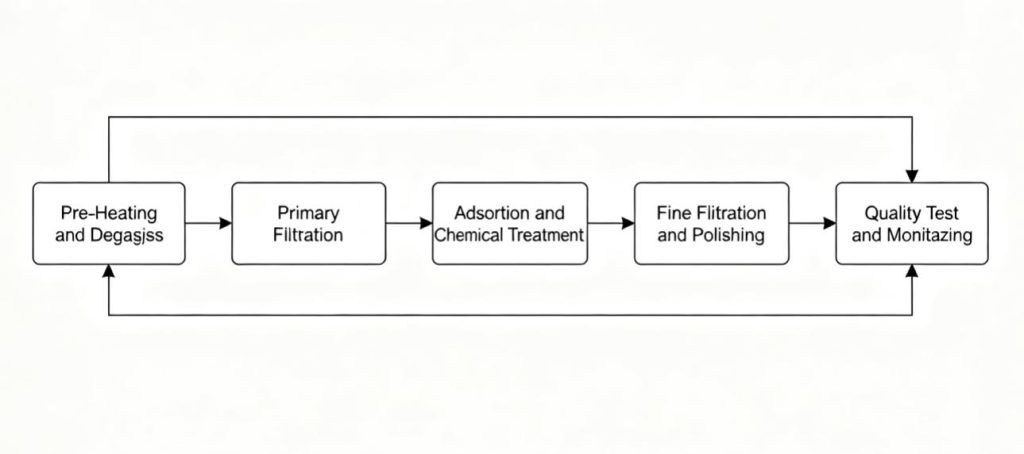
To evaluate the reliability of recycled oil, it is necessary to distinguish between physical filtration and chemical regeneration:
- Standard vacuum filtration: It only removes physical impurities such as free water, dissolved gases, and particles. It cannot address chemical issues such as increased acidity, formation of oxidation products, and deterioration of the oil.
- Deep chemical regeneration: By combining high vacuum dehydration and degassing with specialized adsorbents (such as fullerite/active media), dissolved acids, polar aging molecules, and oil sludge precursors can be removed.
After being processed by the standardized regeneration system, the key indicators of the transformer oil fully meet and even exceed the international standards such as IEC 60422 and ASTM D974.
| Key Performance Parameter | Aged / Degraded Oil | Regenerated Oil Performance | IEC 60422 Standard (In-Service / New) |
| Breakdown Voltage (Dielectric) | < 30 kV | ≥ 75 kV | ≥ 60–70 kV |
| Acid Value (Neutralization) | > 0.20 mg KOH/g | ≤ 0.01 mg KOH/g | ≤ 0.03 mg KOH/g |
| Moisture Content | > 35 ppm | ≤ 3–5 ppm | ≤ 10 ppm |
| Dielectric Dissipation (Tan $\delta$) | > 0.050 | ≤ 0.005 | ≤ 0.010 |
| Color & Clarity | Dark Brown / Turbid | Clear, Transparent Yellow | Clear & Bright |
By reversing chemical degradation, deep regeneration restores dielectric strength and thermal efficiency to an “as-new” state, effectively extending transformer operating life by 10 to 15 years.
How Does Transformer Oil Regeneration Drive Your ESG Goals?
When evaluating the performance of recycled oil, it is essential to understand that physical filtration only removes water and impurities, while chemical regeneration can eliminate polar aging products, making its performance comparable to that of new oil.
The on-site regeneration plan performed exceptionally well in the ESG assessment:
- Significantly reduce carbon footprint: Compared to the high energy consumption of refining crude oil into new oil, on-site regeneration can reduce greenhouse gas emissions in the supply chain by more than 80%.
- Implementing circular economy: Achieving the recycling of insulating oil, eliminating hazardous waste, and assisting enterprises in maintaining the ISO 14001 environmental management system certification.
Ready to Optimize Your Substation Budget?
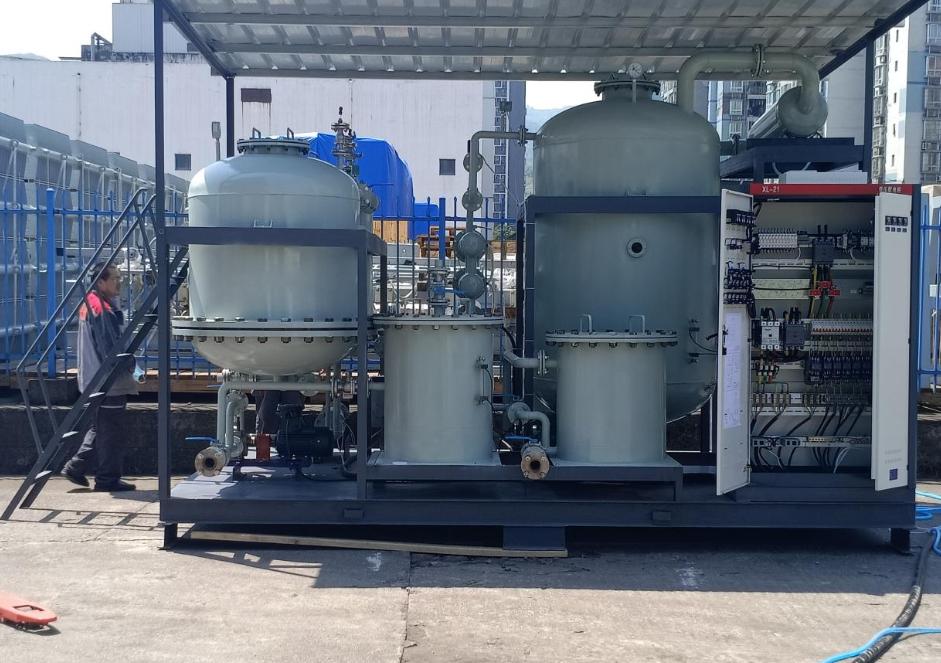
Taking into account the financial returns, technical reliability, and ESG compliance requirements, transformer oil regeneration is a more optimal asset management strategy.
The YANGJIANG transformer oil regeneration machine has the following core advantages:
- Two-stage high vacuum system: Extremely low vacuum level and high pumping speed, achieving efficient dehydration, degassing and particle filtration.
- Deacidification and decolorization technology: The adsorption technology can neutralize acidic substances, remove soluble sludge, and restore the various physical indicators of the oil product.
- Online/ Live Processing: PLC automated control with multiple safety interlocks, ensuring safe operation without power interruption.
- Flexible deployment: Offers skid-mounted and trailer-mounted configurations, enabling rapid deployment at remote substations.
Welcome to visit the product page of the YJ-ZLA series transformer oil regeneration machines to obtain detailed technical parameters, or contact the technical team to obtain customized ROI assessment reports.