
Mechanical Automation Engineer
The maritime industry generates hundreds of thousands of tons of waste oil and heavy oil sludge every year. For port service providers, shipping companies and hazardous waste treatment plants, proper disposal of these wastes is a major cost concern. Since such waste oil is often severely contaminated by seawater, sediment and heavy metals, enterprises often have to dump it at low prices into the low-end fuel market or bear the high cost of hazardous waste treatment.
However, the degradation rate of core hydrocarbon compounds in ship waste oil is extremely low, making them highly valuable for reuse. With the aid of advanced recycling technologies, these highly polluting hazardous wastes can be completely re-refined into high-quality API I or II base oils. To achieve this transformation, it is necessary to overcome the limitations of traditional distillation and adopt multi-stage industrial processes tailored for high-impurity raw materials.
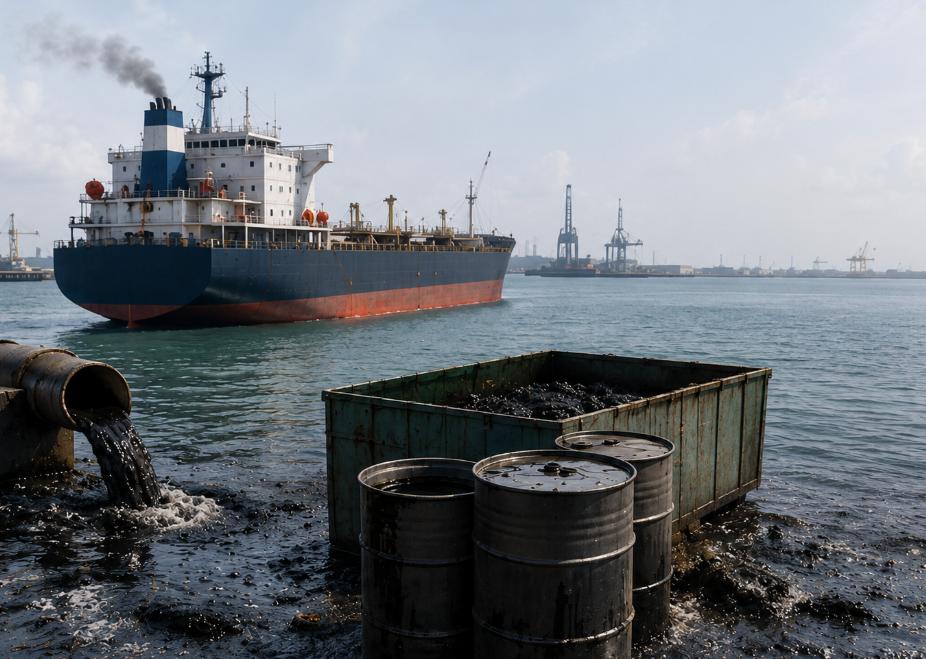
Why Marine Waste Oil & Sludge Ruin Traditional Distillation Plants
Many oil refineries use conventional and low-cost distillation equipment. However, when dealing with marine waste oil or industrial sludge, the equipment often breaks down within a few weeks. The three fatal characteristics of marine waste oil can easily exceed the processing limits of traditional equipment:
- High water and high salt impact: The raw materials often contain 30% to 50% seawater. Direct heating can cause instantaneous flash evaporation, resulting in violent boiling, foaming and overflow at the top of the tower. At the same time, the strong corrosive environment formed by high concentrations of chloride ions will rapidly damage ordinary steel containers.
- Surface rapid coking: Marine sludge is rich in asphalt, heavy metals and impurities. Traditional static heating at the bottom of the tank is prone to causing local overheating, forcing metal impurities and carbon to form a crust on the heat exchange surface. This “coking” not only severely insulates and reduces heat efficiency, but also can lead to pipe blockage and even rupture.
- Uncontrolled thermal cracking: In systems without precise control, in order to forcibly crack heavy oil, the temperature has to be raised to above 420°C to 450°C. This high temperature will damage the structure of long-chain hydrocarbons, causing high-value lubricating oil molecules to undergo excessive “cracking” and degrade into low-value non-standard diesel.
How Modern Technology Conquers High-Impurity Feeds
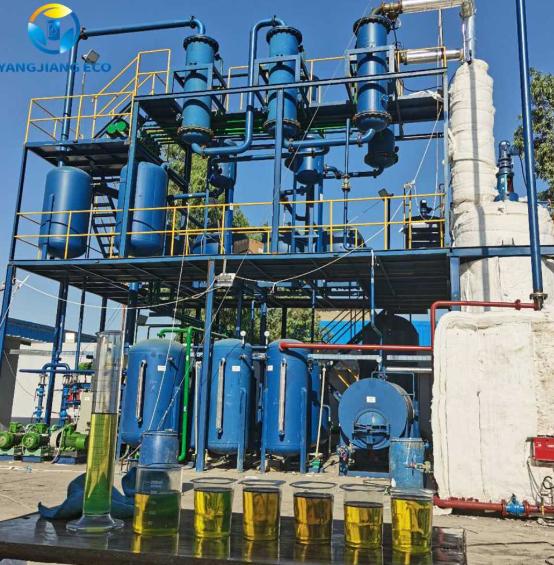
To achieve continuous and uninterrupted processing of corrosive materials, the process design adopts a three-stage integrated chain: membrane evaporation + catalytic refining + deep hydrogenation.
The raw materials continuously enter the film evaporator for dehydration, then undergo precise cutting in the secondary high-vacuum distillation process, and finally enter the refining unit to optimize the appearance color and chemical stability.
Thin Film Evaporator (TFE) – The Core Anti-Coking Barrier
TFE serves as the first line of defense against coking and foaming in the system. The materials do not need to remain in the traditional vessel for a long time; instead, they are continuously fed into TFE, where an ultra-thin liquid film is formed uniformly on the heating surface by the internal mechanical scraper.
This film design significantly shortens the heat transfer path. With the assistance of vacuum, moisture, light components and salts can flash evaporate smoothly within seconds, eliminating the risks of foam formation and tower flooding. Due to the continuous wall-scraping action of the scraper, the material cannot become locally overheated and accumulate carbon deposits, thus ensuring the long-term stable operation of the downstream equipment.
High Vacuum Distillation – Protecting the Hydrocarbons
After removing the moisture and light fractions, the material enters the high vacuum distillation stage. The system operates under deep negative pressure, which significantly lowers the boiling point of the lubricating oil fraction.
By ensuring that the heavy oil molecules evaporate under conditions far below the critical temperature of 420°C, high-quality oil and gas can be effectively extracted, while avoiding the thermal cracking of valuable hydrocarbon chains. This completely preserves the molecular structure of the oil, perfectly meeting the requirements for the production of base oils for high-end lubricants.
Catalytic Refining & Deep Hydrogenation – Eliminating Color Reversion
The key to the further refining of marine crude oil lies in overcoming the problem of color stability. The light yellow oil product obtained through traditional distillation is prone to turning black rapidly in the air due to the residual nitrogen, sulfur and reactive unsaturated hydrocarbons.
In response to this, this process incorporates catalytic refining and deep hydrogenation technologies to carry out a thorough purification of the distillation fractions.
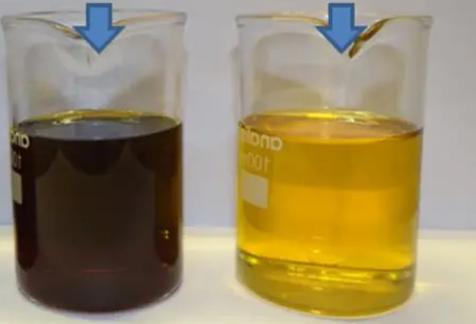
| Process Stage | Target Contaminants | Visual Impact on Base Oil |
| Before Treatment | Unsaturated hydrocarbons, sulfur, nitrogen, aromatics | Dark brown/black fluid, strong odor |
| Catalytic Refining | Traps polar compounds, removes residual odor compounds | Shifts to light amber/yellow hue |
| Deep Hydrogenation | Saturates double bonds, fully stabilizes hydrocarbon chains | Water-white to clear liquid (<1.0 color standard) |
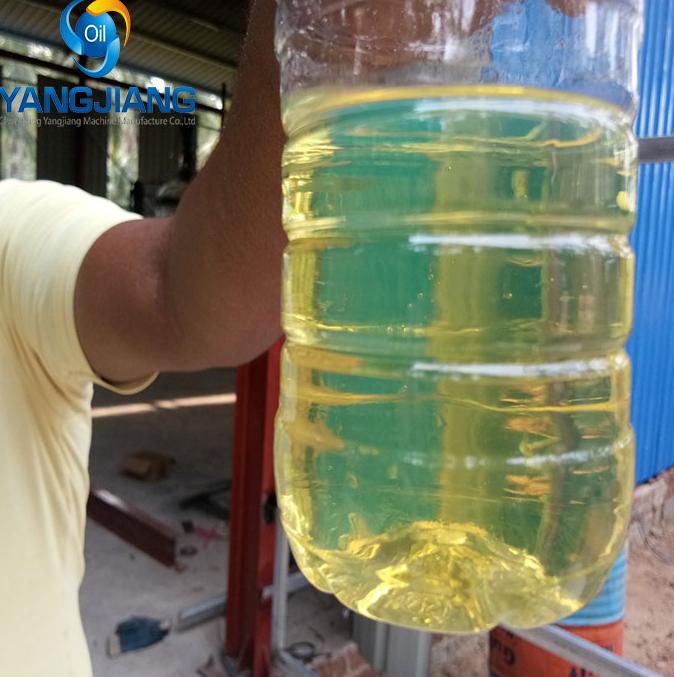
The dedicated catalyst configuration treats the oil structure so that the finished product maintains its stable, light color for at least six months to a year without reverting.
What Can You Get from Marine Slop Oil?
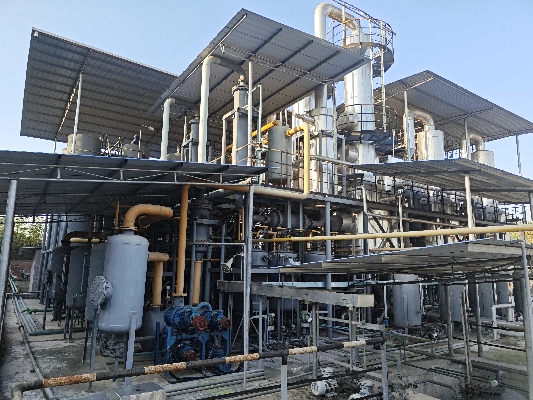
An industrial-scale waste oil to base oil plant with a daily processing capacity of 5-70 tons (TPD) that is fully optimized can convert toxic waste streams into the following high-value products:
- High-quality base oil (yield 70% – 85%): Based on the raw material ratio, it can be produced into API Class I or II base oil with a color degree lower than 1.0-1.5 and a flash point over 200°C. It can be directly used for blending high-end hydraulic oil, industrial lubricants or transformer oil.
- Light diesel distillate (yield 5% – 10%): Extracted during the initial stripping and separation stages, it can be directly used as a clean fuel for the factory’s own indirect heating system.
- Asphalt residue/ industrial asphalt (yield 5% – 10%): Heavy solid pollutants and metal additives settle at the bottom of the tower. After being safely discharged, they are directly sold to road construction, waterproofing or building materials companies, achieving zero solid waste emissions throughout the factory.
Summary
The traditional boiler technology is unable to handle the treatment of marine waste oil and heavy oil sludge. These substances have high water content, high salt content and high sedimentation, which are prone to cause severe coking and chemical corrosion, resulting in the paralysis of traditional equipment. However, through mechanical membrane evaporation, high vacuum control and catalytic refining processes, this high-risk waste can be safely and efficiently converted into stable-quality and highly profitable base oil.
Recommended Products