
Mechanical Automation Engineer
In 2026, the global waste-to-energy sector enters a prime “Policy Bonus” period, with over 40 nations introducing EPR frameworks and carbon credits to incentivize resource recovery.
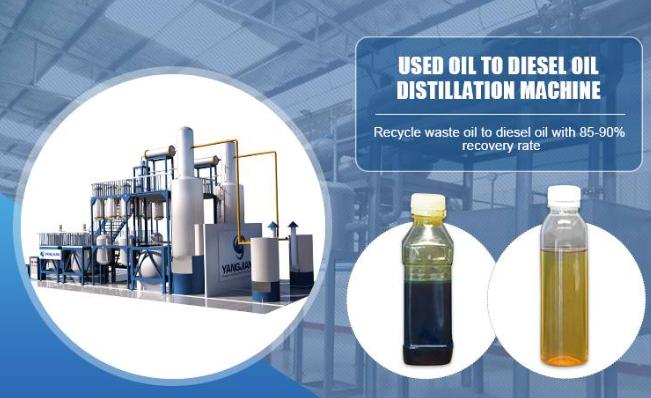
Investors can secure significant government grants by deploying waste oil to diesel technology, which ensures 100% regulatory compliance through advanced high-vacuum distillation and zero-emission tail-gas treatment.
By converting hazardous waste into Euro IV/V compliant diesel, the waste oil to diesel technology allows projects to meet the strict technical audits required for green technology subsidies and 24-month ROI acceleration.
Why “Waste Oil to Diesel” is a Strategic Investment?
The shift from “waste management” to “resource circularity” is at its peak in the year 2026. Global regulations like the EU’s Fit for 55 and the Indian EPR policy framework have transformed waste oil from a threat to the environment into an energy asset.
For investors from the industrial community, the waste oil to diesel project is lucrative because it fulfills the stringent criteria of ESG (Environment, Social, and Governance) factors while producing high-quality commercial diesel. Using high-vacuum distillation processes, the project becomes eligible for the “Green Technology” tag, which makes it eligible for carbon credits and CAPEX grants from the government. The investment in waste oil to diesel conversion goes beyond protecting oneself from expensive energy bills; it is also a policy bonus.
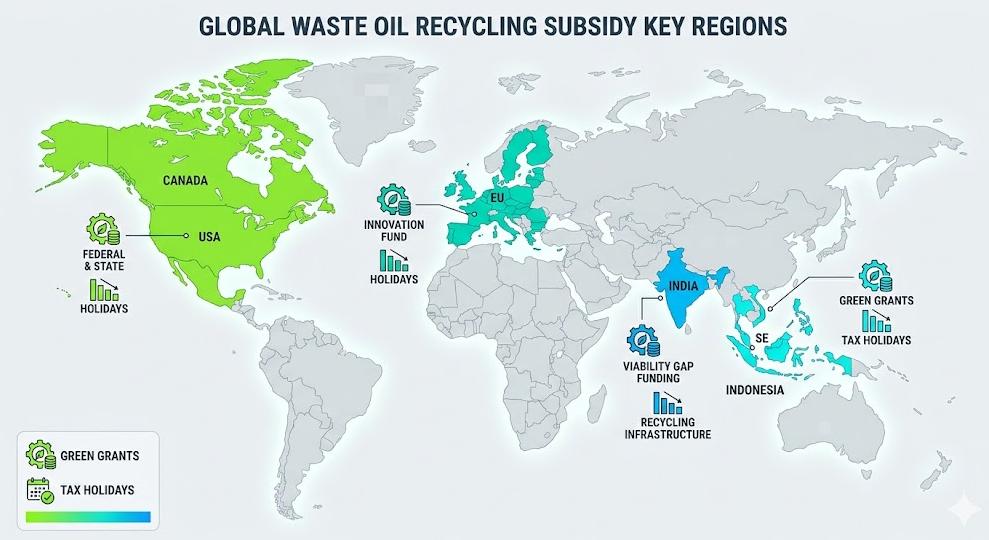
Global Directory of Subsidies for Waste Oil to Diesel Projects
In 2026, government incentives have evolved from simple tax breaks to complex, performance-based financial instruments.
North America (LCFS & Tax Credits)
In the USA, the IRS Section 45Z Clean Fuel Production Credit is now considered to be the most important incentive for “Clean Fuel Production Credits.” For 2026, Waste Oil to Diesel plants with a low Carbon Intensity (CI) score have the chance to receive credits at the rate of $1.00/gallon. Moreover, under the Solid Waste Infrastructure for Recycling Program (SWIFR) from the EPA, priority funding will be made available for “Advanced Distillation Technology.” It is required for the project to submit an energy balance report, which our engineering team can help you prepare.
European Union (The 2026 Green Deal Update)
The EU’s 2026 Circular Economy Action Plan has moved from incentivizing to mandating re-refining. In markets like Germany and Italy, the Innovation Fund provides CAPEX grants covering up to 60% of total project costs for plants that utilize “Best Available Technologies” (BAT).
Asia-Pacific (EPR & Tax Holidays)
The Indian Waste Oil EPR policy is the most stringent in Asia. Recyclers are currently able to produce EPR Certificates for each ton of diesel produced, which will be purchased by lubricant importers that need to fulfill compulsory recycling targets. For Southeast Asia countries like Thailand and Vietnam, waste oil-to-diesel projects qualify for tax holiday benefits lasting 8 to 10 years under Category A environmental investments.
Middle East & Africa
In the Middle East region, “Waste-to-Fuel” clusters are being encouraged by sovereign wealth funds (e.g., PIF of Saudi Arabia) through financial incentives to reduce oil demand in the country. These include subsidized feedstocks, land subsidies, and cheap industrial loans if the plant is ASTM D975 diesel specifications and CE compliant.
How to Qualify: Technical Standards Your Plant Must Meet in 2026
Grants from the government no longer apply to basic “oil burners” but rather apply to high-level industrial equipment that has been proven technically superior. To qualify for any subsidy in 2026, you will need to surpass three key thresholds:
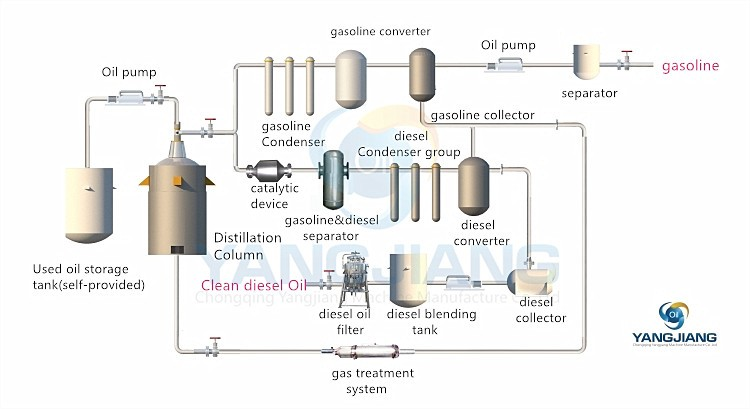
- State-of-the-art Emission Technology: Grants are linked to ESG results. You will need an advanced multistage filtration method using water wash, alkali treatment, and adsorption through activated carbon. Zero odor and VOC emissions will be a requirement for all industrial equipment.
- High-Precision Fractional Distillation: Fuel taxes can be avoided by meeting international specifications (Euro-V compatibility, for instance). The YJ-DSL Waste Oil to Diesel Machine series features highly efficient high-vacuum distillation to control flash point and viscosity. This technology will yield marketable straw-yellow diesel fuel.
- Traceability: New requirements from 2026 include “traceable recycling.” Industrial operations featuring automatic monitoring systems through PLC will provide verifiable carbon audit information. They will trace the actual conversion rate from hazardous waste material into renewable energy products.

Applying for Government Grants for Your Project
In 2026, the profit from a waste oil to diesel plant comes from three places: selling the fuel, selling carbon credits, and collecting government subsidies.
This “triple-income” model is why well-engineered plants are seeing a full ROI in under 24 months. The standards are getting tougher every year, so the best time to lock in these 2026 subsidies is now. If you can meet the technical bar, the profitability is guaranteed by the regulations themselves.