

Mechanical Automation Engineer
Lubricant disposal after use is a real challenge for individuals who own garages, fleets of trucks, or factories.
Hire some specialists for waste removal, and this payment will never cease. Ignoring this problem will eventually result in hefty fines or even severe ecological consequences, which will be recorded against you. However, why not consider an option where your waste oil can actually be a resource, providing you with income?
In this Blog, we will compare three possible solutions. The advantages and disadvantages of these methods, and the process of distillation at your site. By the end, you will know whether recycling your used lubricants makes business sense for your operation.
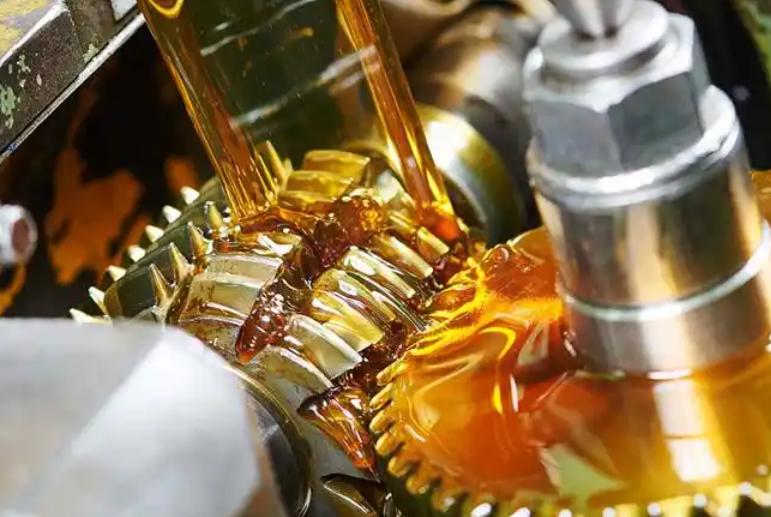
Why Properly Used Lubricant Disposal Matters
Before making comparisons between the methods of disposing of lubricant waste, we need to consider what happens when lubricant waste is disposed of improperly.
Environmental Impact of 1 Liter of Waste Lube Oil
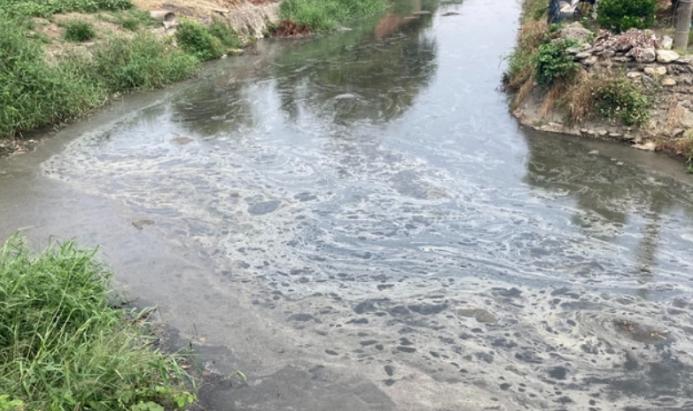
As per the EPA guidelines, one liter of used motor oil can contaminate one million liters of water with its oil slick. This includes toxins such as heavy metals and polycyclic aromatic hydrocarbons (PAHs). The soil in which this waste is disposed of becomes completely sterile for agriculture, while water contamination may affect entire communities.
Legal Risks and Penalties
Several nations regard used oil as hazardous material. The RCRA of America stipulates severe guidelines for storing, shipping, and disposing of these materials. Disregard of these rules will result in penalties of over $50,000 per day. This is similar to the Waste Framework Directive of the European Union, which requires that these substances be handled properly. Not only does your company harm the environment, but it also puts your business at serious financial risk.
3 Common Ways to Dispose of Used Lubricants
Not all disposal methods are equal. Below are three approaches, ranging from “easy but wasteful” to “smart and profitable.”
Burning as Industrial Fuel

This is the oldest trick in the book. Mix used oil with regular diesel or heavy fuel oil, pump it into an industrial boiler or cement kiln, and burn it. You get rid of the waste and save a little on your fuel bill. What’s not to like?
Plenty, as it turns out.
What actually happens:
Used lubricants contain heavy metals — lead, zinc, calcium, barium — that do not disappear when burned. They either:
- Go up the stack as fine particulate matter (inhaled by anyone downwind), or
- Concentrate on the bottom ash, which then needs to be landfilled as hazardous waste
The EU’s Industrial Emissions Directive and the US EPA’s Boiler MACT rules have steadily tightened emission limits. In many jurisdictions, you now need:
- Continuous emission monitors
- Acid gas scrubbers
- A special permit for burning “hazardous waste-derived fuel.”
For small to medium operators, unless you run a large cement plant with proper pollution control, this method is either illegal, prohibitively expensive to comply with, or both. And you get zero revenue from the waste lube oil itself — you are literally burning money.
Off-Site Collection and Disposal
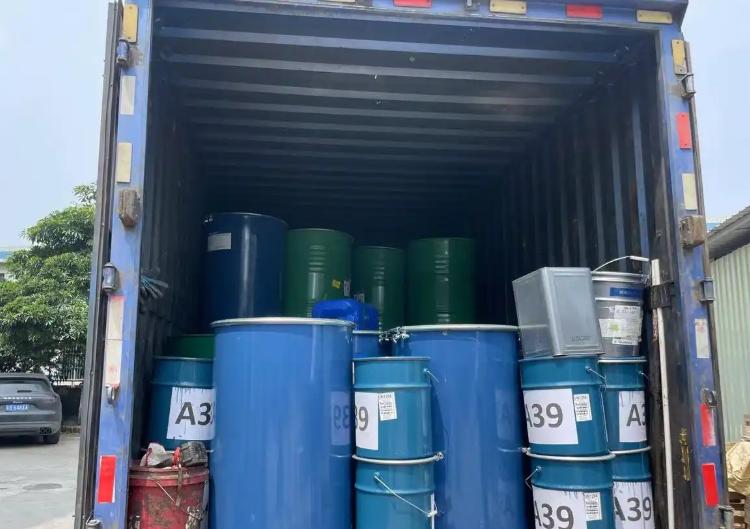
This is what most auto repair shops and small factories do by default. You store used oil in drums or a small tank, call a licensed waste hauler when it’s full, and they take it away. Done.
But “done” comes with a price tag. Here is a realistic breakdown for a workshop generating 500 gallons (about 1.9 tons) of used oil per month for reference:
| Cost Item | Amount | Notes |
| Collection fee per gallon | 0.70−0.70−1.20 | Varies by region and hauler |
| Monthly total (500 gal) | 350−350−600 | Recurring, forever |
| Annual cost | 4,200−4,200−7,200 | No asset created |
| Hidden cost: waiting time | Variable | Haulers come on their schedule |
| Hidden cost: spill risk | Your liability | Drums stored for weeks can leak |
Third-party collection is not wrong. It is convenient for very small volumes. But once you generate 300 to 500 gallons per month, the math changes completely. You are paying a recurring fee to stay exactly where you are.
On-Site Recycling via Distillation(Recommended)
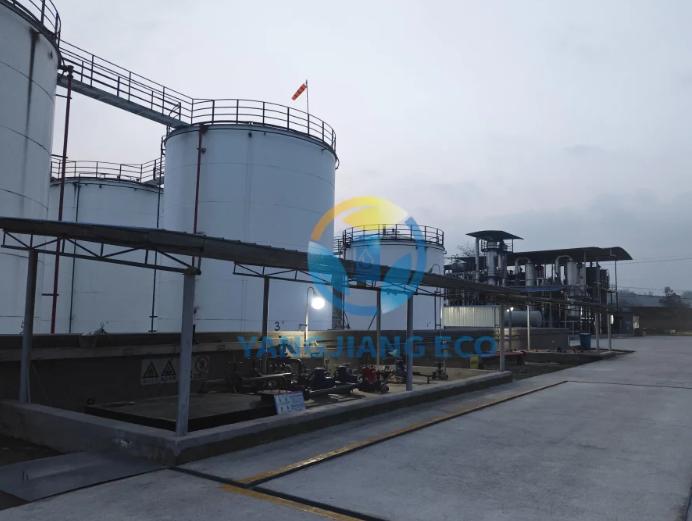
This is where the wise money flows.
Instead of hiring someone to cart your used oil away, you process it on-site in a machine that converts waste oil to diesel. The procedure is rather simple:
Step 1 – Pre-treatment: Remove water and solid particles. Used oil gets into a heating tank where water vaporizes (condensing and collecting separately). Solid impurities are sedimented or filtered out.
Step 2 – Distillation: Water-free and dry oil is transferred to a reactor, heated up to 350–400°C (662–752°F). Hydrocarbon vapors move up and through the catalyst chamber, with large molecules cracking down into smaller ones. This step is core in the disposal of used lubricants.
Step 3 – Condensation: Vapors travel through a water-cooled condenser and return to liquid diesel. A final clay or acid treatment removes color and odor if your market demands it.
Why this beats the other two methods:
| VS Burning | VS Third-Party Hauling |
| No toxic air emissions | No recurring fees |
| Creates a sellable product | You keep the fuel value |
| Fully compliant in most regions | Payback in 6–14 months |
A distillation system costs real money — typically 50,000 to 250,000, depending on capacity. But for anyone generating 500+ gallons of used oil per month, the payback period is under a year. After that, the machine is essentially printing diesel for the cost of electricity and catalysts.
See our Waste Oil to Diesel Machine product page for more information.
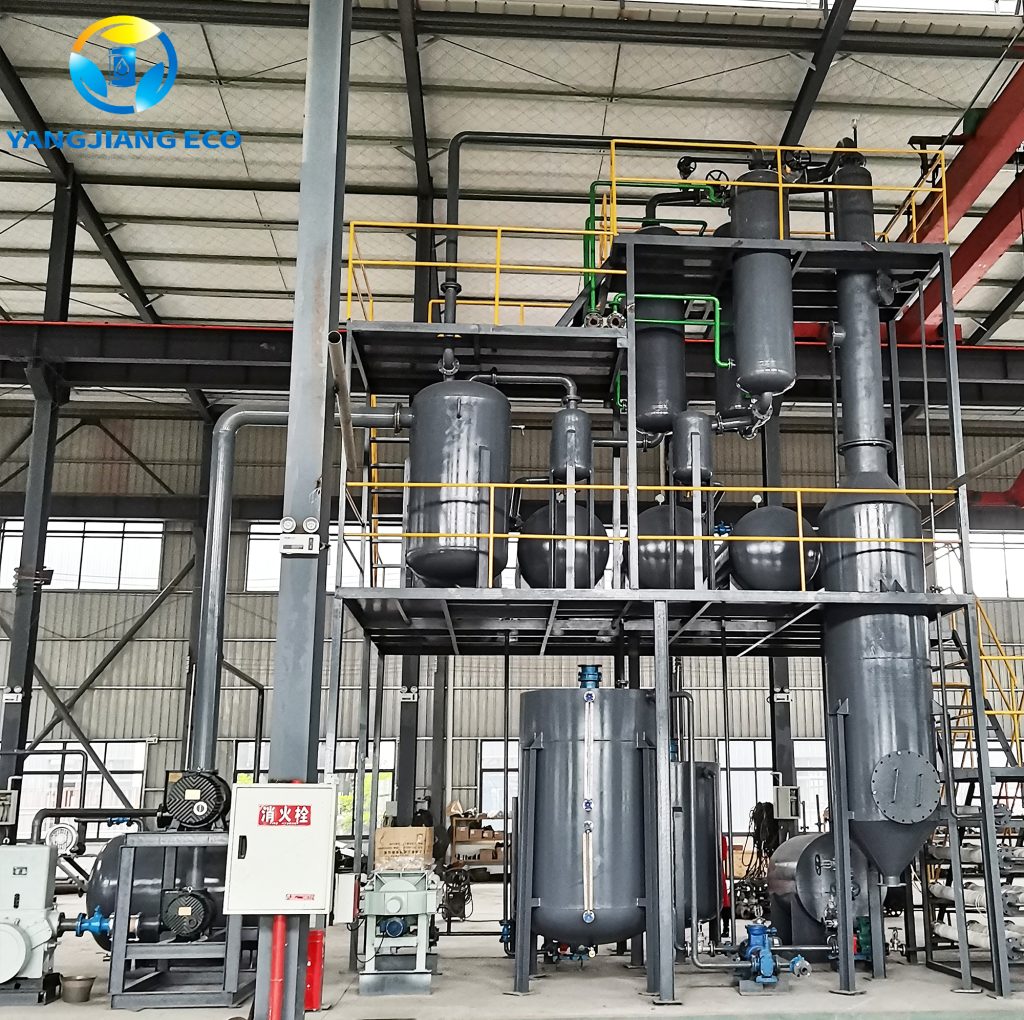
Is On-Site Lubricant Oil Recycling Profitable?
Now let’s calculate the daily cost of operation for a 5-ton-per-day waste oil distillation plant, using today’s market price values (May 2026). These costs will vary depending on where you are, but here is your starting point.
Daily Operating Cost (5 tons input):
| Cost Item | Calculation | Amount (USD) |
| Waste oil purchase | 260 x 5 tons | 1,300 |
| Heating fuel (diesel) | 0.5 ton x 700 | 350 |
| Catalyst (solid type) | Amortized per day | 175 |
| Electricity, labor, water | Approximate | 150 |
| Total Daily Cost | 1,975 |
Daily Revenue:
| Revenue Item | Calculation | Amount (USD) |
| Diesel output (85% yield) | 4.25 tons x 700 | 2,975 |
| Residue oil (sold as low-grade fuel) | 0.5 ton x 160 | 80 |
| Total Daily Revenue | 3,055 |
Net Daily Profit = 3,055 – 1,975 = 1,080 USD
This amounts to more than 27,000 USD monthly (25 working days).
Let us now move on to calculating the cost of equipment. Typically, a full plant for converting 5 tons per day of waste oil into diesel fuel costs from 160,000 USD to 220,000 USD (turnkey).
Payback period – 6 to 10 months.
After which, each barrel of your waste oil turns into profit minus just the cost of electricity, catalyst, and manpower. You no longer have to worry whether recycling will yield profits or losses. This is no longer even an issue. It is simply whether you can afford to forgo doing this.
Need a customized spreadsheet for your particular volume? Contact for a feasibility study.
Final
Ineffective lubricant disposal results in environmental destruction and liabilities. Out of the three disposal methods discussed – direct burning, third-party pick up, and on-site distillation – only the latter converts waste into a money-making venture.
Waste oil to diesel equipment saves on repeated waste fees, generates income-producing oil, and complies with worldwide circular economy legislation. An enterprise disposing of at least 500 gallons monthly will break even from on-site recycling within one year.