
Mechanical Automation Engineer
For today’s car maintenance facility, used engine oil is inevitable in its activities. In the past, used engine oil was considered hazardous waste requiring special storage and disposal.
But as energy costs rise and fall, the approach towards used engine oil is changing. Used engine oil is no longer “dirty oil”; it is now considered to be a highly energetic material.
The Profit Leak in Auto Repair Operations
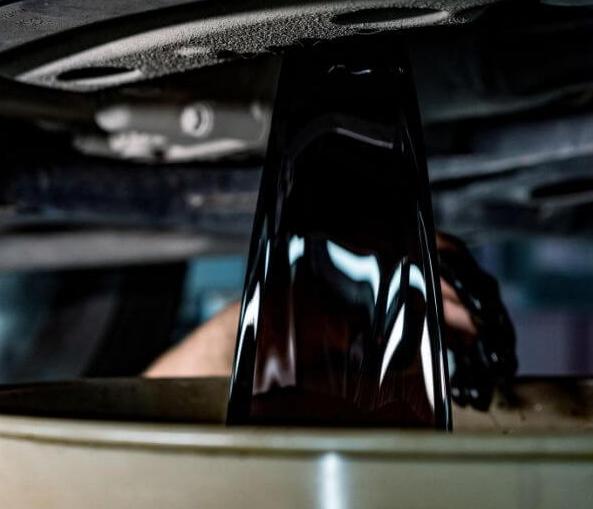
All the workshop managers consider the use of the waste oil from a perspective of costs. For example, you spend money on special barrels for it, then you spend money on keeping these barrels at your facility, and finally, you will pay an authorized collector to remove them.
In other words, there is a “loss of profits” here. Although your shop spends money on getting rid of the oil, these collecting companies make money off of it. They refine or even blend this oil of yours and sell it further as fuel for industry or as a basis for making some oils.
Common Waste Oil Management Solutions
Third-Party Oil Disposal
This is still the most widely used approach. The oil is collected by an approved waste management company.
- Positive: Your shop can avoid any initial labor requirements when implementing the plan.
- Negative: Vulnerable to increased service costs and “market fluctuation.” In the case of reduced global prices for oil, the cost of service increases due to lower margins.
Storage & Compliance

Compliance drives this need. The EPA’s SPCC regulation in the United States or other ISO equivalents around the world mandate that you use double-wall storage tanks and maintain strict records of spills.
It’s a liability. The longer you store the oil, the more likely you are to have a leak, contamination, or fail an inspection.
Energy Recovery
A few repair shops employ waste oil heaters to give off “free” heating to their shops in winter months.
The Shortcoming: Even though efficient, this is considered a poor use of the waste oil because it renders unusable those valuable hydrocarbons that can form lubricants through refining. Also, waste oil burners are increasingly being banned in many places
The Shift Towards “Refining” instead of “Burning”
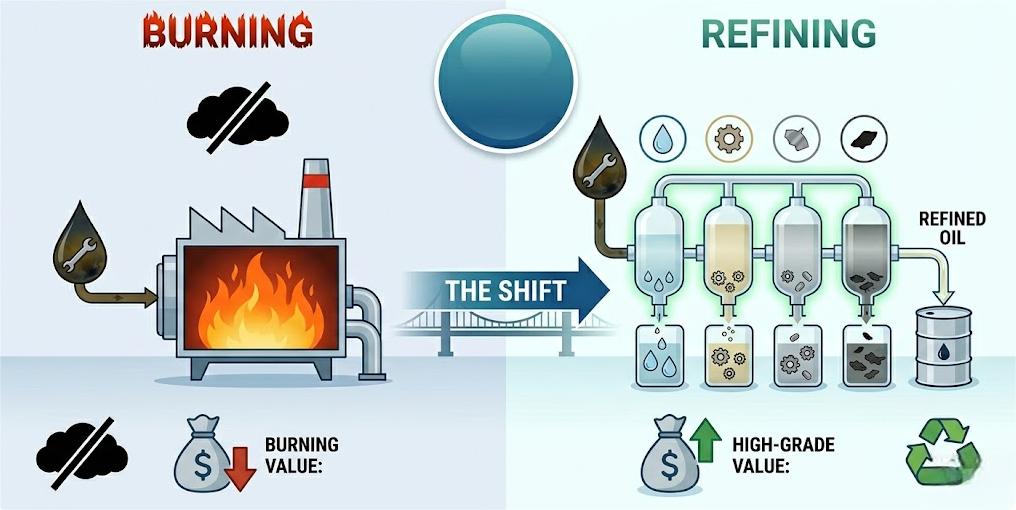
There is growing pressure on the automotive industry to embrace sustainability. The term “refining” is used to describe the removal of impurities such as water, fuel dilution, metals, and carbon deposits to restore the oil to its molecular composition.
Whereas burning the oil means destroying it, the refining process allows the oil to be conserved for further use. A high-grade base oil (Group I or Group II) is worth three to five times as much as the same quantity of oil being sold as “burner fuel.” It’s because recovery is more profitable than burning.
How Modern Oil Distillation Technology Works
To comprehend the value of waste motor oil, one needs to understand the scientific aspect. Today’s distillation is not just a filtering process but rather a molecular separation technique.
- Dehydration and Degassing: The waste oil is placed in a vacuum environment to strip out any moisture and light fuel compounds that may be present in the engine oil.
- High-Vacuum Distillation: This is the key phase. In a high vacuum environment, the boiling point of the oil becomes much lower. Hence, there is no risk of “cracking” (decomposition of the oil molecules). The oil becomes vaporized and then condensed into various fractions.
- Fractionation: The oil is separated into different grades, including light base oil (SN150) and heavy base oil (SN300 or SN500).
- Refining or Polishing: The distilled oil is normally refined using solvents or clay polishing to eliminate any remaining odors. The result has an attractive water-white or honey-gold color.
Why YANGJIANG Solutions Stand Out
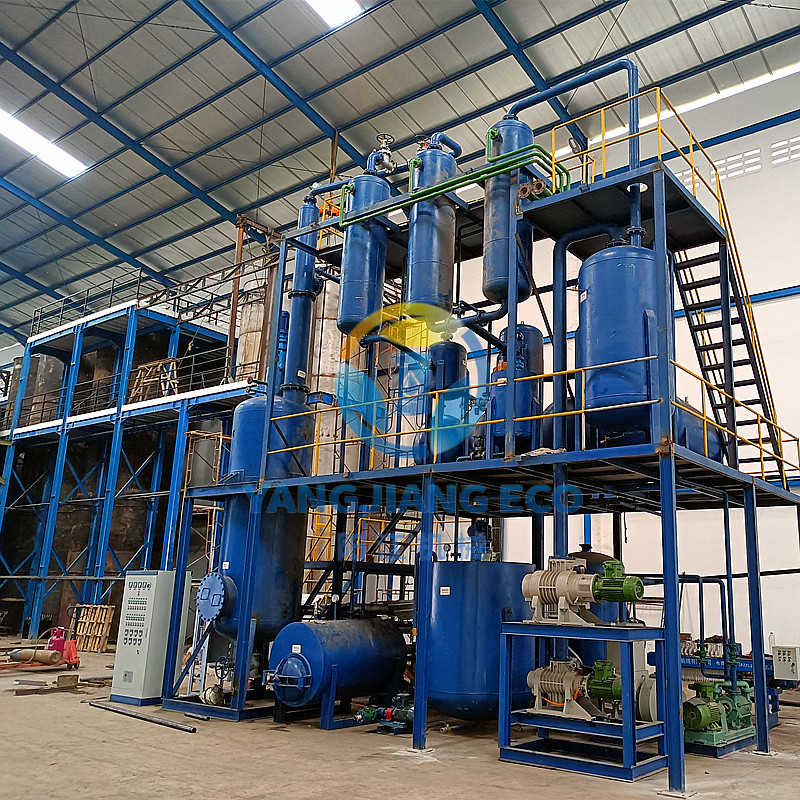
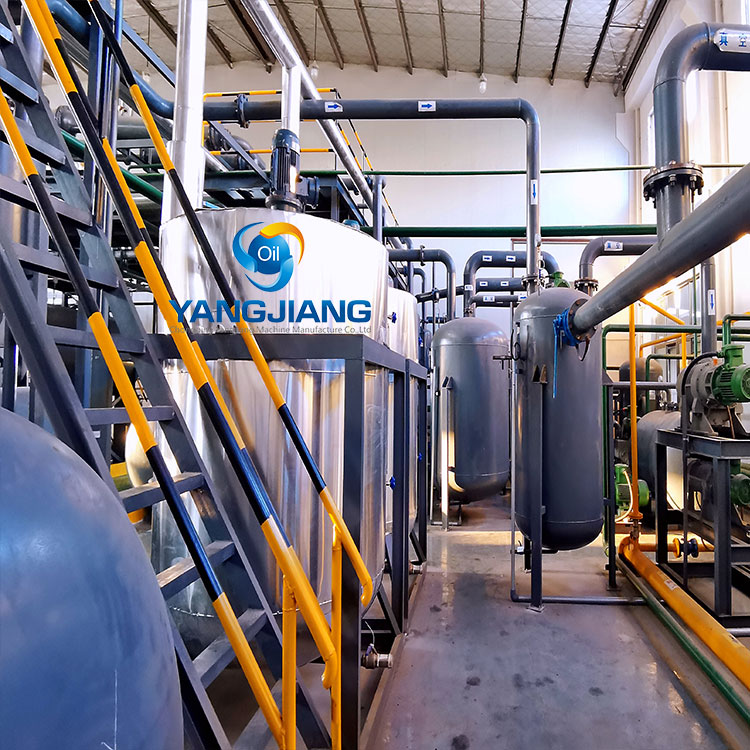
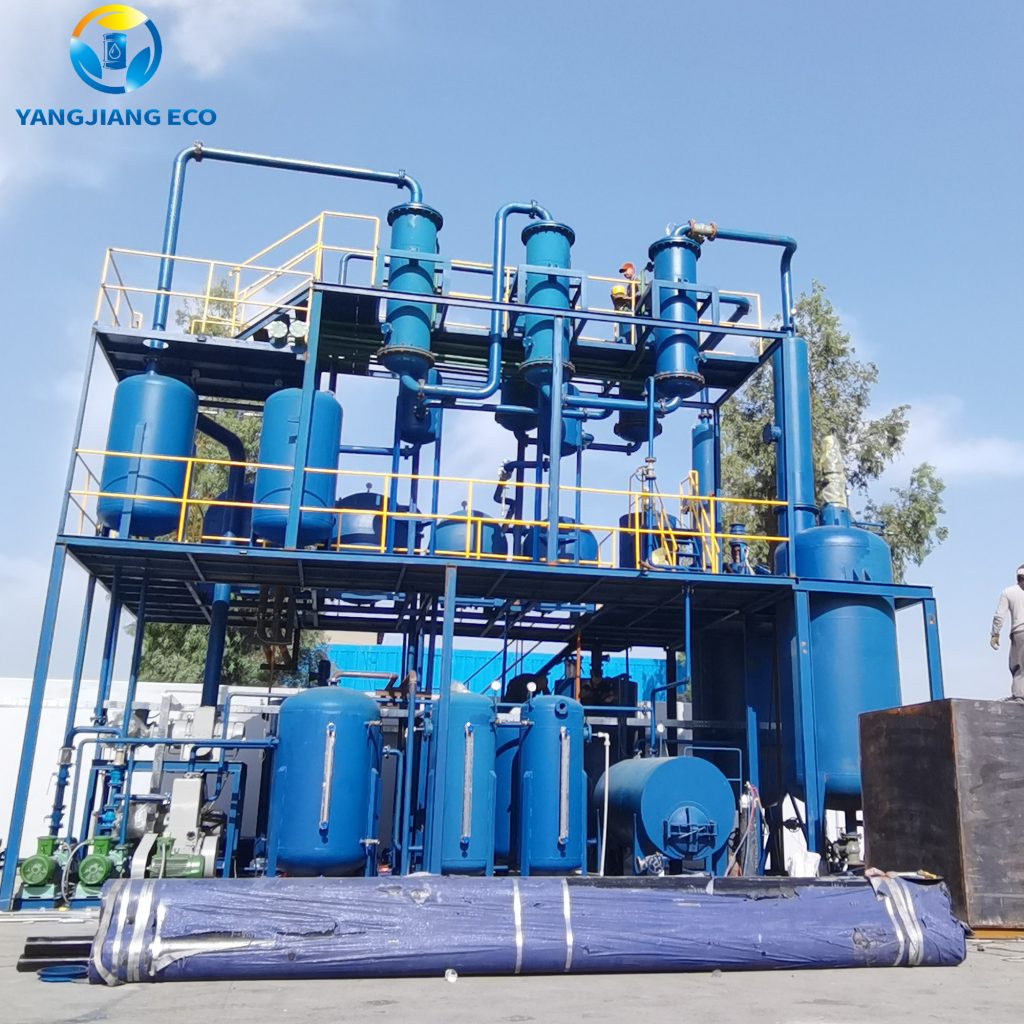
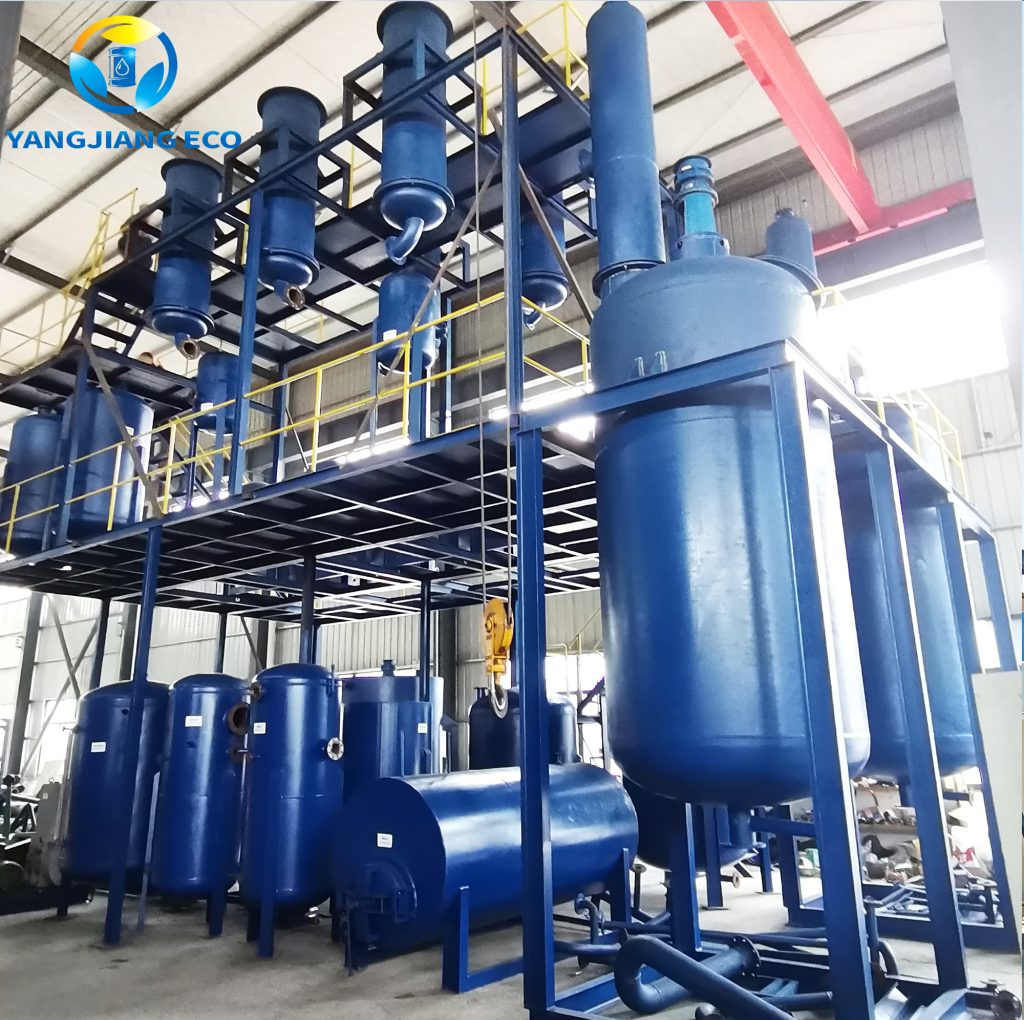
As a manufacturer with decades of specialization in vacuum distillation, YANGJIANG has engineered a waste engine oil recycling system specifically to solve the challenges of localized workshop waste oil disposal needs.
- Purity Standards: While many small-scale machines only produce “black diesel” or “dirty fuel,” YANGJIANG’s high-vacuum technology produces high-quality base oil that meets SN150–SN500 standards.
- Automation & Safety: Our systems utilize PLC-controlled automation. This means a technician doesn’t need to stand over the machine; the system manages temperature and pressure gradients automatically, with safety interlocks for overpressure or temperature spikes.
- Yield Efficiency: Our distillation plants are optimized for a high recovery rate—typically converting up to 85-90% of waste oil into usable products, minimizing the “bottoms” or sludge that remains.
- Direct Manufacturer Support: We don’t just ship a box. We provide the engineering layout, overseas installation guidance, and the technical training necessary to ensure the output oil meets your specific market requirements.
Practical Considerations for Implementing a System
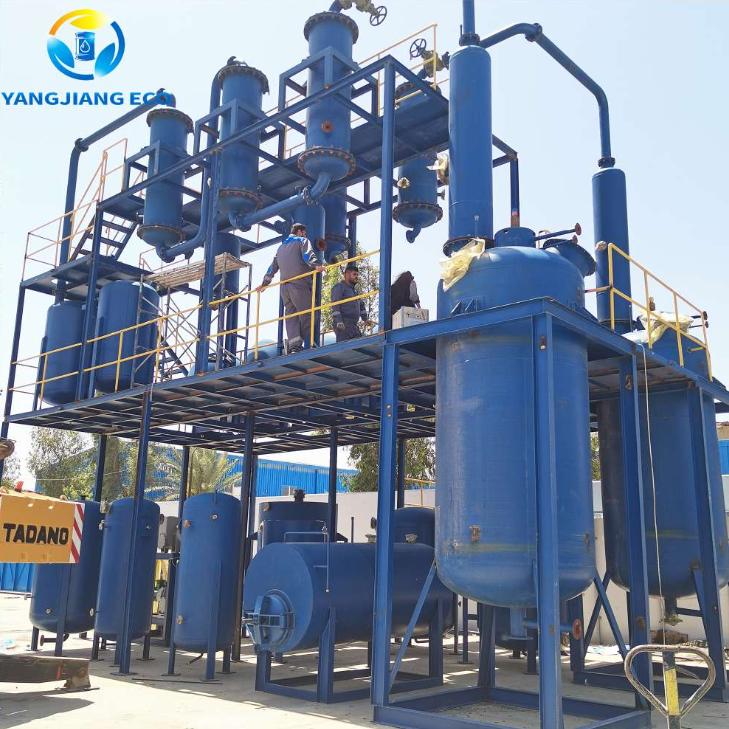
Making the move from theory to practice demands a practical evaluation of the extent to which the distillation system will be incorporated into your operation. It’s not just about the equipment; it is also important to match your shop’s waste generation with the limitations of your workspace.
Some practical considerations in setting up oil recycling in your workshop include:
| Factor | Critical Assessment | The YANGJIANG Advantage |
| Throughput Volume | Matching machine capacity to your shop’s daily waste oil generation (e.g., 500L vs. 10 tons). | We offer scalable systems from compact skid-mounted units to large-scale continuous plants. |
| Energy Overhead | The cost of electricity or fuel required to maintain the vacuum and heat. | Integrated heat-exchangers recycle thermal energy from vapors to pre-heat incoming oil, cutting costs. |
| Operational Footprint | Physical space requirements, including ventilation and safety clearance zones. | Optimized, modular designs minimize the footprint while maintaining easy access for maintenance. |
| Automation Level | The amount of labor required to monitor and operate the system daily. | Fully automated PLC control systems allow for “set and forget” operation with minimal manual labor. |
| ROI Timeline | The period required for disposal savings and oil sales to cover the initial investment. | With current market rates, most YANGJIANG clients achieve full payback within 12 to 24 months. |
Through professional distillation, one will be able to save money on waste oil disposal, protect the environment, and gain additional profits.
YANGJIANG is a manufacturer and will provide all the technical know-how and industrial machinery to help with this process.
If you want to make use of your waste oil, you can visit our site or speak with our engineers about an ROI analysis.