

Mechanical Automation Engineer
Producing “fresh” diesel is easy, but maintaining its stability is the main challenge for most refineries. If your diesel changes from golden yellow to “blackish-brown” within a few days, it’s not bad luck – it’s a chemical reaction caused by residual alkenes and active sulfur. This deterioration can seriously damage your market price and reputation. To solve this problem, you must start addressing the issue of molecular instability that determines the quality and marketability of the fuel.
Why Your Diesel Oil Turns Black Fast?
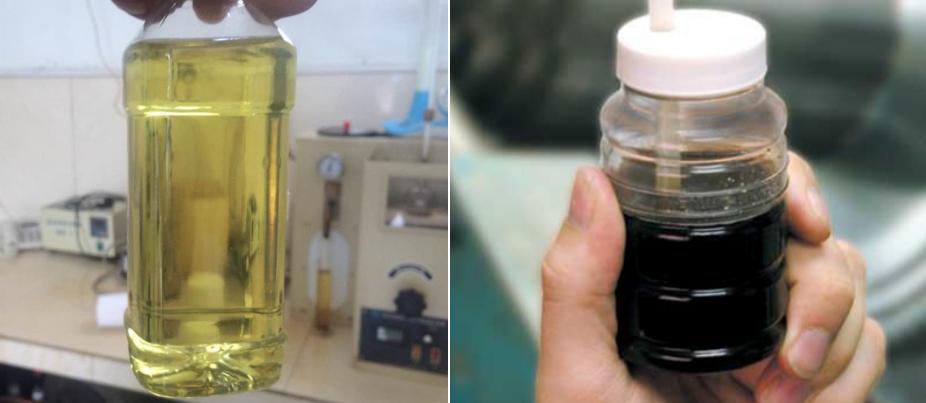
Oil color “reversion” is an expected chemical process caused by contaminants that are impossible to remove during regular distillation. In order to prevent oil color from darkening, it is important to learn about the main factors that cause this process:
1. Oxidation of Polymeric Materials: As a result of cracking under high temperatures, the large molecules of hydrocarbon are divided into smaller molecules called olefins. Olefins are chemically unstable materials; they start bonding with oxygen in a storage tank almost immediately, thus creating dark-colored gum and resin substances.
2. Nitrogen and Sulphur Catalysts: Waste oils have a considerable amount of additives. Unless the oil in your plant is refined in depth, nitrogen-containing substances (pyrroles) are retained in it. Such substances act as strong catalysts, causing oxidation reactions to occur ten times faster than normal. The presence of such catalysts in concentrations below 50 parts per million leads to complete opacity of the clear oil within two days.
3. Thermal Over-Cracking and Micro-Carbon: If the efficiency of vacuum separation in your plant is low, you need to heat the oil beyond 400 centigrade. The result is the phenomenon of “local overheating” in the furnace tubes. Instead of evaporation, the oil starts charring. It produces carbon particles smaller than one micron in size; too small to be filtered off by filter paper yet large enough to diffuse light.
Common Mistakes in Small-Scale Waste Oil Distillation Plants
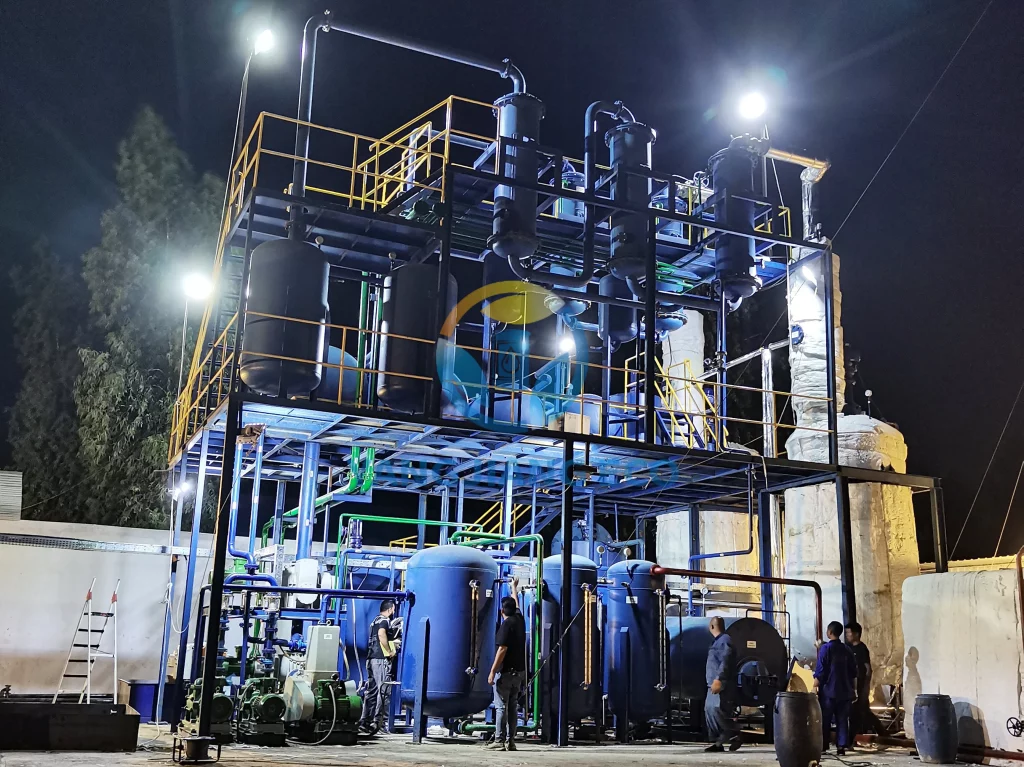
Most unsuccessful projects contain similar technical errors. If your oil smells and is dark, then most likely you have become a victim of one of the three industrial “pitfalls”:
Excessive Relying on Acid and Clay
The “Acid-Clay” process has been around for more than 40 years and can be viewed as an outdated “quick-fix” solution. Although sulfuric acid gets rid of some coloring components, it produces harmful acid sludge, which is impossible to dispose of in accordance with legislation by 2026. Also, clay will get rid of only larger particles, but not dissolved sulfur and nitrogen, causing the smell.
Not Considering the Degassing/Dehydrating Step
Proper distillation requires prior preparation. Failure to degas and dehydrate the crude oil under mild vacuum conditions between 100 degrees Celsius and 150 degrees Celsius can result in reactions between the “light ends” and the heavy diesel components under higher temperature conditions. This process causes an unpleasant smell that will always remain in your product. There is no way to “wash away” something that has been chemically cooked into your crude oil.
Utilizing a Low-Vacuum System that Will Char the Oil
When there is a lack of vacuum, then you will be forced to increase the temperature. In the realm of oil production, it can be said that the heat is the enemy of color. This basically means that when you use a low-vacuum system, you are basically “cooking” the oil. The diesel structure will be broken because of the increased heat, resulting in a lot of sulfur carryover and instability.
Professional Solutions: How to Achieve Water-White, Odorless Diesel?
To survive in the international market in 2026, you need technology to go after the molecule behind it all. At YANGJIANG, there are three main technologies used for this process:
YJ-DSL Series – Highly Accurate Temperature Control for Purified Distillate
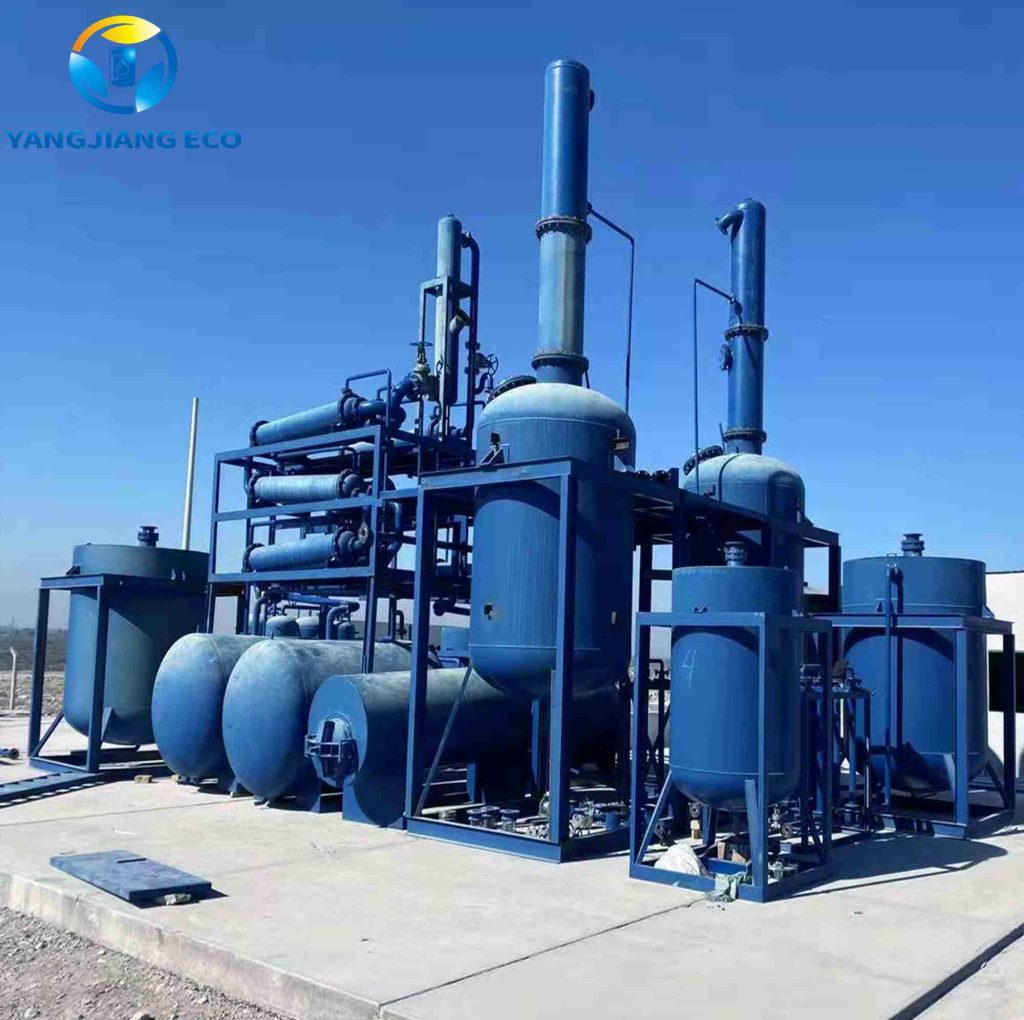
The YJ-DSL distillation machine technology is specially designed to sustain an ultimate vacuum pressure of not more than 500 Pa. This way, the temperature of diesel distillation does not have to reach high levels (320 °C to 340 °C). Hence, no thermal cracking can occur in the first place, which means that there will be no reactive olefins formed, and the oil will maintain its molecular composition intact, prolonging the time of shelf life considerably.
YJ-SR Solvent Refining Technology: The Ultimate Fix for Color Reversion
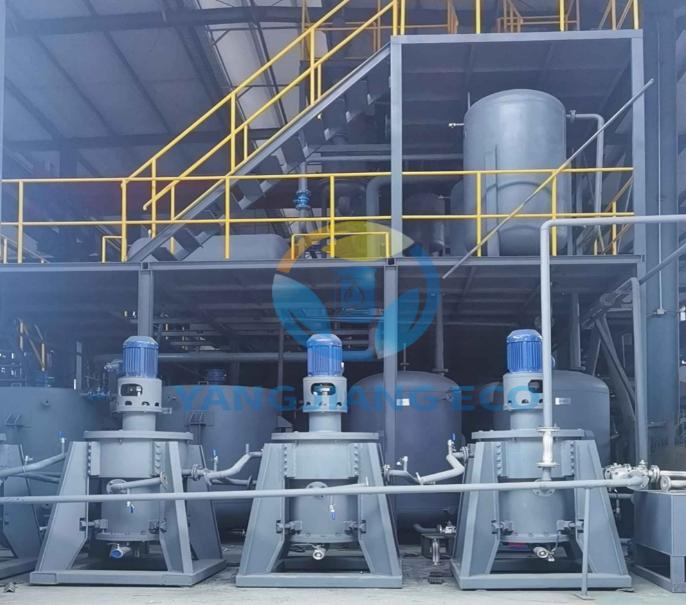
This is the “Gold Standard” for modern refining. Instead of a messy chemical reaction like acid, YJ-SR solvent refining plant uses a physical extraction process. Our proprietary solvent has a natural “magnetism” for nitrogen, sulfur, and oxides.
- The Process: The solvent is mixed with the distilled oil, “pulling” the impurities into a separate phase.
- The ROI: The solvent is recovered at a 99% efficiency rate and reused. This reduces your consumable cost to roughly $10 per ton, whereas acid and clay can cost over $40 per ton.
YJ-SNC Desulfurization: Eliminating Odors at the Molecular Level
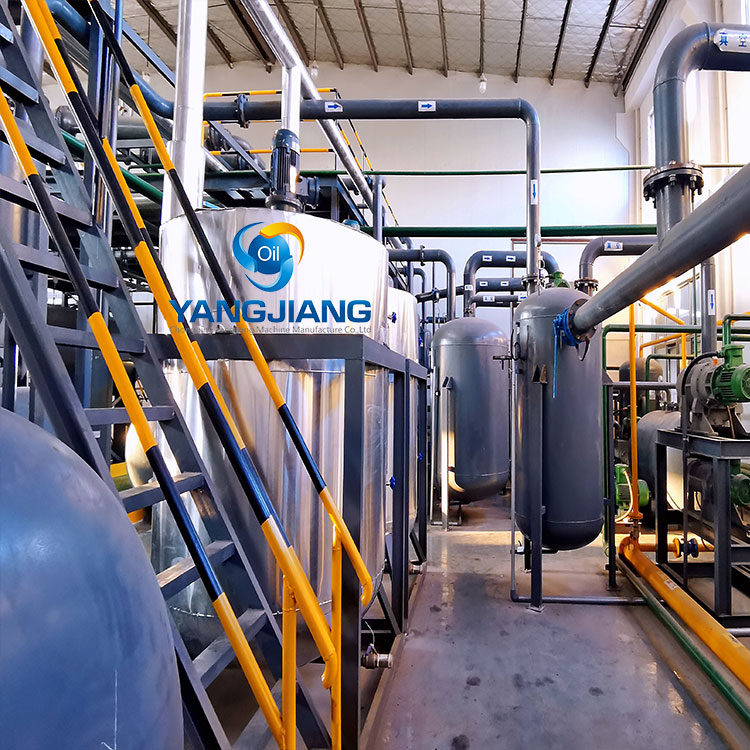
The strong “rotten eggs” smell is caused by mercaptans, which are active sulfur compounds. In this regard, the YJ-SNC diesel desulfurizatio module uses a catalyst to eliminate such molecules. The process is not simply odor masking but the transformation of sulfur into an odorless form. As a result, you can sell the product to premium sectors such as marine diesel and industrial engines.
5 Things to Ask Your Equipment Supplier Before Buying
Before you make the final decision, put your supplier through this technical audit. If they cannot provide specific data, they are selling you a machine that will produce “black oil”:
- Guaranteed Shelf Life: Will the finished oil maintain an ASTM color of less than 1.5 for at least 180 days?
- Working Vacuum Pressure: Does the system maintain a stable working vacuum below 500 Pa during full-scale production, not just on a dry run?
- Consumable Cost Breakdown: What is the actual cost per ton for chemicals? Demand a breakdown of the solvent recovery rate.
- Waste Management: Does the process produce “acid sludge” or any hazardous byproduct that is difficult to dispose of in your region?
- Sulfur Specs: Can the system reduce sulfur content by at least 80% for high-sulfur feedstock like tire pyrolysis oil?
Elevate Your Oil Quality to Secure Your Market Position
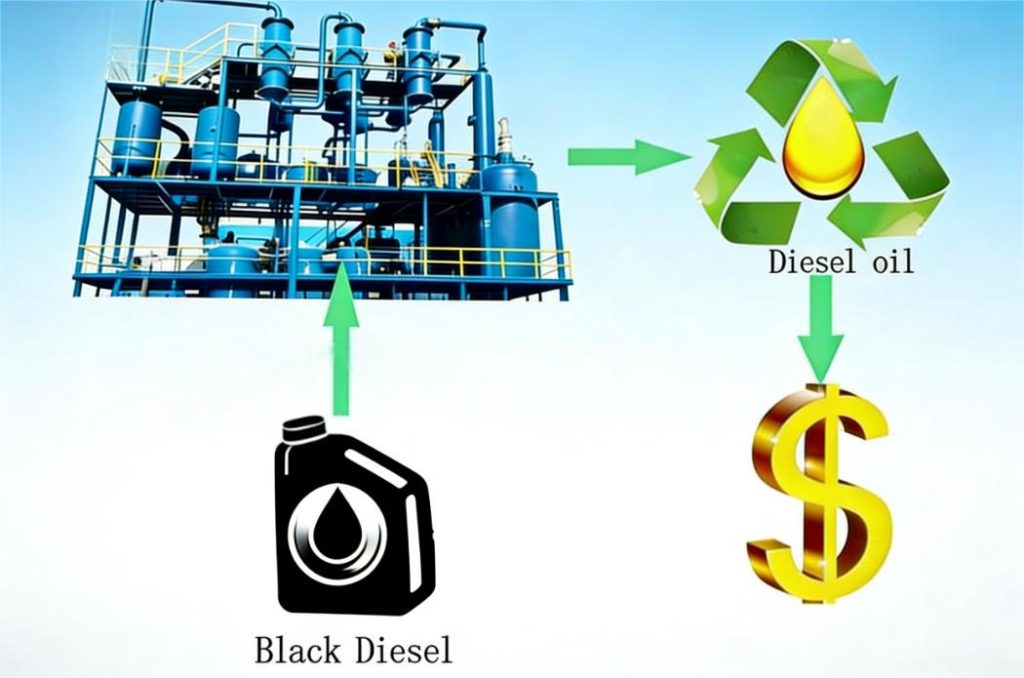
There is no place in the world market for poor-quality “reverting” fuel. Your oil becomes black; you must sell it at a discount to lower-class boiler consumers between 20% and 30%.
With YANGJIANG technology, you have the potential to sell high-quality “Water-White” diesel that can stay stable during long-term storage.
Pro-Engineer Tip: Remember always to check your flash point during the distillation phase. Low flash point usually means incomplete degassing, which is the first warning sign that your color stability will soon degrade during storage.
Quality equipment is not only a matter of good hardware but also chemical processing knowledge. Stop struggling with black oil production and become a refining expert. Contact us now to learn more about our YJ-DSL and YJ-SR refining technologies.